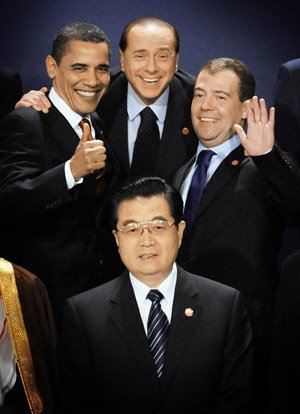
Yurduu hoyor honogiin umnu Orosiin Gadaad Yamnii said Sergei Lavrov-iin Medvedev-t zoriulj bichsen "Orosiin urt hugatsaanii hugjild gadaad bodlogiig ur dunteygeer ashiglah hutulbur" nertey barimt bichig il garch neleed shuugian tariv. Hediigeer ene barimt bichigt uchirguy gots goid shine zuil baihguy bolovch Orosiin gadaad bodlogiin har hairtsaga yur ni yamarshuuhan baigaa talaar neleed tsegtstey oilgolt ugnu. Yalanguya deehne minii bichsenchlen Orosuud "zuulun huch" ruu shiljij buig endees ajiglaj boloh yum. Nuguu talaasaa ted umnuh uye shigee uzel surtal deer tulguurlaj gadaad bodlogoo yavuuldag baisnaa bolij iluu realpolitik handlagatay bolsoniig mun harj bolno. Tovchhondoo bol ene barimt bichgiig hamgiin anh il bolgoson Orosiin Newsweek setguuliin helj buichlan: "Смысл документа в том, что Россия намеревается не на словах, а на деле проводить внешнюю политику, в которой не будет друзей и врагов, а будут только интересы."
Uunii deer minii huvid neg sonirhol tatsan zuil ni Orosiin Mongold barimtlah bodlogiin tuhai boginohon heseg bailaa. Hedii uuniig bid ungursun neg hoyor jild tednii uildleer ni yurunhiiduu gadarlaj baisan avch yag alban yosnii barimt bichigt ingej yag tag tusgasan baigaag ni anhaaraldaa avuushtay:
Монголия
-Расширять двустороннее экономическое сотрудничество на приоритетных для России направлениях, опираясь на заключенные в 2009 г. межправительственные соглашения о создании новых совместных предприятий по строительству железных дорог и освоению в Монголии стратегически важных месторождений полезных ископаемых.
Ugluunii tsain deer hajuud suuj taarsan angiin hoyor ohin hoorondoo yariltsaj baina: "Hicheeliin daraa zavtay biz dee, manaid hureed ir. Chatroulette-deye." Hunii yaria dundaas ni sonsoh durguy l dee. Gehdee terhen hugatsaand chatroulette gej odoo yu baidag yum boloo geed zurvas bodood unguruv (no Freudian nonsense, please). Harin oroi hicheeleesee ireed sursan zangaaraa The New Yorker-iin web ruu ortol Chatroulette-iin talaar Roulette Russian gesen niitlel garch. Medeej ene niitlel "the internet's latest sensation" Chatroulette-iin talaar bolovch hamgiin sonirholtoy heseg ni anh ene website-iig hiisen Andrey Ternovskiy hemeeh 18 nastay patsan herhen Amerik ruu garch bui tuhai bailaa. Humuus hugjij bui ornuudiin brain drain geed l yariad baidag, getel ene niitlel shig nudend haragdtal bichseniig urid umnu ni unshij baisanguy:
Official talk of modernization and innovation rankles Vladimir [father of Andrey], who supplements his income with work for Russian Souvenirs. “It’s demagoguery,” he says. Recently, he sent a project proposal to Rusnano: no response. “These projects don’t interest them. The Internet doesn’t interest them. If I proposed something else, like cutting down some forest in the Far East, that would instantly interest them. There’s no support from the government. It’s completely absent. And Andrey knows that if he stays here no one will support him. The country doesn’t need people like him.”
Andrey, in turn, feels that he doesn’t need the country, and declares that he does not want to run a Russian company, which might be forced to pay “dirty,” under-the-table salaries to avoid a crushing tax burden, or to deal with extortion from corrupt tax and fire-code inspectors. “My perfect plan is that I don’t ever return to Moscow,” he told me. He would figure out the permanent-visa thing once he got to New York; for now, he was just eager to get out. “I don’t want to come back,” he said. “I want to live in America.”
Uuruur helbel brain drain-ii hamgiin tom shaltgaan ni hugjsun ornuud iluu taatay orchin, urgun bolomjiig olgodog geheesee iluu turj ussun niigem ni tuhain huniig shudragaar hudulmuruu uneluulj amidrah argaguy bolgodogt baigaa baigaa yum. Ene nuhtsuld avilga heel hahuuli, nuser bureaucracy-g nuraahguygeer gadaadad garsan humuusee erguulj tatah ni bitgii hel odoo baigaa hedee togtoon barih tun hetsuu.
Uuniig harin zarim het alsiin haraatay nuhduud oilgodogguy bololtoy. Jishee ni Bayarkhuu suulchiin niitleldee bas dahin avch ugchee. Tuunii helj buigaar "Гадаадад захиалгаар программ хангамж үйлдвэрлэдэг дор хаяж 1000 компани Монголд хэрэгтэй байна!" Heregtey baigaag ni hun bur нанотехнологитой технологигүй oilgoj baina l daa. Gehdee uuniig bodot baidal bolgohod chuham yu saad bolj baigaa hereg ve? Humuus mangar bolohooroo information technology-giin potential-iig oilgohguy baigaa yum bish shuu dee. Harin Bayarkhuu niitleldee asuudliin gun ruu tooj orsonguy, busdiig zugeer l mangaraar ni duudaad ungursun baina: "Манай ШУА, их сургуулиуд бэлэн болов уу? Үүх түүхээрээ хөөрцөглөн амьсгалсан хэвээр, баахан түүхчдээ шинжлэх ухаан гээд нийгмээрээ төсөөлчихсөн яваа манайханд бол 'цахим', 'нано', 'IT' гэх үгс маш хол, хүнийрхүү байлаа ч би яалт ч үгүй нүүр туллаа шүү!" Tegvel yapond ajillaj baigaa heden arvan Mongol programmer-uudiin talaar yu geh ve? Het uhaantay hunii niitleliig unshih hetsuu ch yum aa daa.
Harin ungursun doloo honogt Milan-d bolson Mongol oyutnuudiin uulzalt deer yurunhiilugchiin zuvluh Otgochuluu gadaadad baigaa bolovsroltoy Mongolchuudaa tataj avah "Зөгийн Үүр" hutulbur heregjuulj baigaa talaaraa yariv. Gol sanaa ni bol economic incentive ashiglaj buyu (endees iluu nariin medeelel avch bolno) tedgeer humuusiig Mongold irehed ni ehnii eeljind mungunii huvid sanaa zovohguy bolgoh aj. Otgochuluugiin helj buigaar Germany-d jishee ni tend surguuli tugssun humuusiig Germanii zasgiin gazar neg jiliinh ni tsalingiin deer 10'000 euro uguud nutag ruu ni yavuuldag gene (Otgochuluu uuruu uuniig ni avch baisan gev).
Gehdee ene incentive humuusiig eh oron ruugaa nutag butsahad ni hangalttay shaltgaan bolj chadah uu? Minii medeh gadaadad bui mash mundag Mongolchuudad mungu bol tiim tom problem bish. Ted Mongold delhiin hemjeenii tsalin avdagguy yum aa gehed uursdiiguu henees ch dutuuguy avaad yavchih chadaltay humuus. Harin Mongold uguylegddeg hamgiin chuhal zuil bol ayulguy amidrah orchin: hool idlee hordono, zam garlaa mashind shurguulne, huuhdee surguulid yavuullaa bagsh nar ni uursduu ulaan noil. Uunii deer avilga, hun surtaliig ni nemvel ger bultey humuusiig baitugay bidnii uyeiihniig ch shantraana. Uuniig yanzlahguygeer humuusiig gants munguur dallaad hureed ireh ni yu l bol, irlee gehed hamgiin chadaltaynuud ni ard uldeed hotsroh ni oilgomjtoy.
Gehdee nuguu talaasaa bid zorig gargan ergej ochihguy bol ene buhen uurchlugduhguy. Yamar hoyor amidrah bish gants bieiinhee amariig haraad suugaad baih bas l utgaguy asuudal. Uuruur helbel Mongoliig hugjuulehiin tuld ali ali taldaa yamar neg zuiliig zoliosloh shaardlagatay. Yamar ch chuhal uil hergiig yug ch zolioslohguygeer buteej baisan tuuh baihguy.
otunbayeva: Много сомнений о парламентской форме правления. Никак не приживается в СНГ. Но возьмем Монголию, там парлам.форма правления с самого начала.
otunbayeva: В Монголии к руководству пришли плавно или через конвульсии удивительно высоко образованные кадры. Можно поизучать.
На вопрос, каким должно быть лицо России для другого мира, Медведев, улыбнувшись, ответил: "Такое, как у меня сейчас, - улыбающееся".
"Если это будет лицо России, лицо, которое улыбается другим странам, мне кажется, это правильно, - заметил президент. - Но и нам должны улыбаться. Мы не должны ни на кого скрежетать зубами, злиться, дуться, считать, что нас обижают, затирают куда-то, заталкивают в угол, а мы на это реагируем каким-то образом"
Soft power (buyu zuulun huch) bol olon uls sudlald neleed ertnees garch irsen cliche ch gemeer oilgolt. Suuliin 20 jild (soft power-iig hamgiin anh Joseph Nye 1990 ond tomyolson) soft power Amerikiin gadaad bodlogiin gol tsum ni bolj irsen gej uzdeg humuus olon bii. Hyataduud ch soft power-t shiljij buig B. Indra (unuu blog bicheed baidag nuhur mun uu?) deehne ontolson baisan. Gehdee Orosuudiin huvid genet neg shuniin dotor zuulun huched shiljchihsen yum bish. Orosuud ali Putin-ii uyes ehlen soft power deer tushiglehiig oroldsoor irsen (Brookings Institute - "Russia's Newly Found 'Soft Power'" [2004]). Harin odoonoos l amjilt olj ehelj bui yum uu daa (Financial Times uuniig because of "a series of fortuitous events" gesen baisan).
Mun tuunchlen sayhan NYTimes deer garsan niitlel deer Kyrgyzstanii "huvisgald" Orosuudiin soft power herhen ashiglasniig neleed unemshilteygeer uguuljee:
Rather than a change of heart on press freedoms, still stifled at home, Russia’s stance in Kyrgyzstan appeared to be a new tactic in dealing with the former Soviet republics it regards as within its sphere of influence. Backing freedom of expression — in this case to oppose a leader with whom it was unhappy — was just one element of a wider, behind-the-scenes role in the uprising that may help Russia win influence in the new government.[...]
But Russia appears to have learned well the lessons of the so-called color revolutions in Georgia, Ukraine and Kyrgyzstan in the past decade. In those uprisings, which overthrew governments allied with Russia but that had become alienated from their own populations, the West provided open support for opposition elites and free media.
Harin end Orosuud Mongold Kyrgyzstaniih shig uil yavdliig bii bolgono geh metiin hii dugnelt hiimeerguy baina. Gehdee endees olon ulsiin - yalanguya manai hoyor hurshiin - gadaad bodlogiin uzel barimtlal asar ih uurchlugduj buig olj ajiglah ni chuhal. Ene nuhtsuld neg talaaraa soft power-t avtaj Ukraine shig teneg alham hiihguy baih, nuguu talaaraa yum l bol Orosuud Hyataduud Mongold bolj bui buhnii ard baina gej orilj humuusiin dund utga uchirguy aidas devreehguy baih uchirtay.
[...]the way to do it is by thinking through these issues for yourself—morality, mortality, honor—so you will have the strength to deal with them when they arise. Waiting until you have to confront them in practice would be like waiting for your first firefight to learn how to shoot your weapon. Once the situation is upon you, it’s too late. You have to be prepared in advance. You need to know, already, who you are and what you believe: not what the Army believes, not what your peers believe (that may be exactly the problem), but what you believe.
How can you know that unless you’ve taken counsel with yourself in solitude? I started by noting that solitude and leadership would seem to be contradictory things. But it seems to me that solitude is the very essence of leadership. The position of the leader is ultimately an intensely solitary, even intensely lonely one. However many people you may consult, you are the one who has to make the hard decisions. And at such moments, all you really have is yourself.
Yur ni bol Steve Jobs mayagiin "stay hungry, stay foolish" gesen yarianuudad durguy - heterhii schmaltzy sanagdaad baidag yum. Ene blog deer ch tiimerhuu yumnuud neg ih haraad baidagguy baih. Harin Deresiewicz-iin (review-nuud deeree zohiolchdiig hair nairguy muuldgaaraa aldartay er) Westpoint-d unshsan ene lecture ih setgel hudulguv. Yalanguya uursdiin gesen itgel unemshilguy, yos zuiguy, unet zuilsguy bidnii uyeiinhen mash anhaaraltay unshih heregtey.
If you operate in the penumbra of legality, as havens do, it is easy to slip outside the bonds of legality altogether. Where there is legal avoidance of tax and regulation, illegal avoidance of tax and regulation is rarely far behind, and often hard to distinguish: where there is secrecy the motive is frequently impropriety; where there is impropriety, criminality is rarely far behind, and hard to distinguish. To turn a blind eye to avoidance of the law is to undermine all law.
The upshot: odoohondoo Bayarkhuugiin "Зовлогоо зовоохгүй мөнгө олдог хамгийн мэргэн арга"-iig unshsanaas John Kay-iin "How to make money without trying"-iig unshih ni iluu ur uguujtey yum uu daa, gegege.
Khan!!! Much of the world thinks of Genghis Khan as a brutal conqueror whose empire stretched across most of Asia by the early 13th century, but in Mongolia, he's seen as a national hero and a lucrative tourist draw. Everything from airports and hotels to cigarettes and vodka bear his name, but Mongolia's most extreme instance of Genghis worship may be the 131-foot equestrian statue overlooking the steppes about an hour from Ulan Bator, the capital city. The statue is wrapped in 250 tons of stainless steel, and visitors can take an elevator to the top of the horse's head. Genghis himself would probably be proud.
Ungursun buten saind hedii 3 honog untalguy essay bichsen ch Staatsoper-t Wagner-iin Tristan and Isolde-iig 6 tsag setgel dogdlon uzev. Neg talaaraa Tristan and Isolde-iig ali ertnii uzehiig muruudsun, nuguu talaaraa Daniel Barenboim udirdaj baigaa bolhoor ch ter uu ene togloltiig neleed udaan huleesen yum. Barenboim-iin huvid humuus medeh baih. Barag udguu amid baigaa hamgiin mundag udirdaach (no offense Gergiev), bas tuguldur huurch. Tuunii tuhain uyedee hanilj baisan Jacqueline du Pre-giin hamtaar bichuulsen Haydn, Elgar hoyoriin Cello Concerto, Schubert-iin Trout Quintet bol dahin davtagdashguy.
Minii huvid Barenboim-iig chuham yaj meddeg bolsonoo sain sanahguy baina (perhaps through his political activism?). Gehdee hamgiin anh tuuniig ungursun ond Felix Mendelssohn-ii mendelsnii 200 jiliin oid zoriulsan tuguldur huuriin concert deer harj baisan yum. Tuunees hoish 5 sariin 23-nd dahin Baruun German baiguulagdsanii 60 jiliin oid zoriulan Beethoven-ii 9-r Symphony-g Brandenburg-iin Haalga deer udirdan toglohod ni yag door ni zogson uzej baisan. Tsag iluutey toglodog 9-r symphony-g (CD 74 minute-iin bagtaamjtay baidag ni uuntey holbootoy ch gej yaridag) neg ch temdeglel ashiglalguy tseejeeree udirdsand ni tuhain uyed bishirch baij bilee. Getel ene udaad intermission-toygoo niileed 6 tsag orchim togloson Tristan and Isolde-iig shuud tseejeeree udirdaj namaig bur heleh ugguy bolgov.
Tristan and Isolde-iin huvid ugtaan bol asar ertnii domog. Lav l anhniih ni huvilbar 1150 orchim ond harialagddag geh yum bilee. Bur ug ehiig ni haival dahiad heden zuun jil uhrah biz (King Arthur-iin tuuh deer gardag Lancelot, Guinevere hoyor bol ene domgiin bas neg huvilbar). Gehdee Wagner-iin huvid uuriin oper-oo Gottfried von Strassburg-iin Tristan (13-r zuun) deer suurilan bichsen gedeg. Sonirholtoy ni yag uuruu unshaad uzvel ene hoyoriin hoorond neleed ih yalgaa bii. End bichij nurshmaarguy baina. Harin Wagner-iin huvid terhuu zohioliin hamgiin chuhal 3 hesgiig libretto deeree buulgasan yum (zohioliin uil yavdal ni interneteer duuren tul end bichihees zailshiiv).
Buddhism baruunii soyol irgenshild tsoo shinechlel avchrana ene ter gej yaridag humuus ene opera-g saitar uzehiig zuvluyu. Yur ni sain yarival 19-r zuunii suul hagast Nietzsche, Schopenhauer-aar damjin Buddhism neleed huchtey orj irsen baidag. Wagner ch tuhain uyedee Schopenhauer-t avtaj baisan ni tuunii buteluudees ilt medregddeg (philosophy of the "will," for instance). Tristan and Isolde jishee ni ter chigtee udur/shunu, uhel/amidral, unen/hudal gesen arga bilgiin uhaan deer suurilsan baidag. Uil yavdliin huvid ch gol hudulgugch huch ni enehuu hoyor taluudiin zorchildoon yum.
Perhaps the best demonstration of what Marx meant by alienation (Entäusserung):
Modern bourgeois society, with its relations of production, of exchange and of property, a society that has conjured up such gigantic means of production and of exchange, is like the sorcerer who is no longer able to control the powers of the nether world whom he has called up by his spells.
Unuudur delhii deer amid baigaa hamgiin olon hund tanigdsan, ner nuluutey Mongol hun hen be?
*One person I have in mind is Fu Ying. An ethnic Mongolian who served as the Chinese ambassador to the UK until few months ago. And as I understood, currently she's the vice-foreign minister of China. I don't know any other ethnic Mongolian who has held this high position in the world politics in recent years.
Mongolei will 20.000 türkische Männer "importieren"
(AFP)
Istanbul — Um einem akuten Frauenüberschuss in ihrer Bevölkerung entgegen zu wirken, will die Mongolei einem Zeitungsbericht zufolge 20.000 türkische Männer "importieren". Diesen Vorschlag werde eine hochrangige Delegation aus Ulan Bator in den kommenden Tagen bei einem Besuch in Ankara unterbreiten, berichtet die türkische Wirtschaftszeitung "Referans". In der Mongolei, die sich eng mit der Türkei verbunden fühle, komme derzeit ein Mann auf sechs Frauen.
Vorgespräche zwischen den beiden Regierungen seien bereits im Gange, meldete das Blatt unter Berufung auf einen namentlich nicht genannten Regierungsvertreter. Auf welche Weise die möglichen Kandidaten ausgewählt werden sollen, stehe noch nicht fest.
Culture isn't knowing when Napoleon died. Culture means knowing how I can find out in two minutes. Of course, nowadays I can find this kind of information on the Internet in no time. But, as I said, you never know with the Internet.
Islam will definitely take on a European cast. That's exactly what happened to Islam in every place it has ever gone. And Muslims can certainly be good Europeans. But non-Muslim Europeans will be the judge of that, too. The Swiss referendum shows that Muslims arrive at a way of being European and believe that they've met the Europeans at the halfway point. But that does not mean non-Muslim Europeans feel the same.
Currently reading: Krugman - The Return of Depression Economics and the Crisis of 2008. Ungursun zun neg dampuursan delguurees 60% discount-tay avsan nom (how ironic?). Wonderful reading! Krugman shig asuudliig urgun untsguur harj, amand amtagdaj, chihend sonsogdtol tailbarladag bolchihvol amid yavsnii hereg butdeg baih daa, gegege.
Leszek Kolakowski - Freedom, Fame, Lying And Betrayal: Essays On Everyday Life. Hervee delguurt ene nom haragdval yu ch bodolguy shuud hudaldaj avaaray. Punkt. (Yur ni nariindaa bol Kolakowski baigaaguy bol Solidarnosc amjilt olj Communism nurah baisan ni ergelzeetey. Daan ch ene zun nas barahad ni Baabar yadaj gants ug gan hiigeeguy...)
Articles of the Day:The Trials of Tony Judt. Setgel hudulgum niitlel. Tegj baigaad Judt-iin talaar post bichnee. Minii medehiin Eric Hobsbawm-iin hamtaar odoogoor amid baigaa 20-r zuunii Europe-iin hamgiin mundag tuuhch. + Avinash Dixit on Paul Samuelson
Album of the Day: Man on Wire Soundtrack (barag Essential Michael Nyman geed nerlechihmeer sanagdav, gesnees Man on Wire-iig zaaval, bur zaaval olj uzeerey!)
Krugman urges Chinese government to quickly abandon its artificial currency devaluation:
[...] there’s the claim that protectionism is always a bad thing, in any circumstances. If that’s what you believe, however, you learned Econ 101 from the wrong people — because when unemployment is high and the government can’t restore full employment, the usual rules don’t apply.
The bottom line is that Chinese mercantilism is a growing problem, and the victims of that mercantilism have little to lose from a trade confrontation. So I’d urge China’s government to reconsider its stubbornness. Otherwise, the very mild protectionism it’s currently complaining about will be the start of something much bigger.
But putting American interest aside, let us briefly consider the effect of Chinese currency revaluation on Mongolia. Obviously, all the products we buy from China will immediately become more expensive to us. By the same token, it would also give us incentive to produce all those products in Mongolia - especially garments, which would decrease our unemployment level. Not a bad thing for a country that doesn't produce much. However, on the large scale, our economy would suffer significantly, for we earn most of our income through exporting mineral deposits to China. If Chinese economic growth slows down due to currency revaluation, the demand for our mineral deposits would fall accordingly. Needless to say this is a serious threat to our economic development - as we've briefly reminded of this imminent danger throughout last year.
What's most alarming about Krugman's article is the point that China may inevitably face currency revaluation. Not because China's sympathy to the world - especially to the US - but because of growing protectionism against China, which would eventually force them to devalue their currency anyway. But one thing that really interests me right at this moment is whether our government is anticipating this kind of outcome. If yes, what kind of exit strategy are they envisioning?
In the PLoS study, mathematician Lauren Ancel Meyers of the University of Texas, Austin, and colleagues analyzed patterns of flu transmission under different assumptions about how likely a carrier is to infect other people. Using data on household size, age distribution and other factors, they compared a strategy that targets infants and the elderly with one targeting those most likely to catch flu: school-age kids.
For moderately contagious strains, says Prof. Meyers, the optimal strategy is to vaccinate the kids. "This severs the transmission chain," she says, thereby indirectly protecting the old. For very contagious strains, it is better to vaccinate those most likely to die if they catch flu, such as the elderly. "Highly contagious strains can find their way around this buffer of immunized schoolkids," she explains.
Here is a question I will be asking my freshman seminar this week:
You are a utilitarian social planner. You have a limited number of H1N1 vaccines. How do you allocate them? Do you (A) give them to specific groups, such as high-risk populations, or (B) sell them to the highest bidder and rebate the revenue lump-sum to everyone? If you choose (A), do you allow those individuals allocated the vaccine to sell their dose to someone else? Be sure to specify the economic environment as carefully as possible. And remember: Your goal is to maximize total utility.
Энэ жил дунд сургуулиа төгсөж байгаа хүүхдүүд болон Монголын их дээд сургуулиудаас гадаадын их дээд сургуулиуд руу шилжиж liberal arts чиглэлээр BA (Bachelor of Arts) авахыг хүссэн оюутнуудад Герман улсын Бэрлин хот дахь European College of Arts сургуульд бүтэн тэтгэлэгтэй суралцах боломж байгааг дуулгая.
Ireh Purev garagt suuliin uyed shuugiulaad baigaa "wunderwonk" Parag Khanna end lekts unshih yum baina. Gants gem ni namaig sign up hiih gej uhantsaar baital suudal ni duurchihej; deerees ni lektsiig zohion baiguulj bui American Academy haa baisan hotiin nuguu zahad tul tiisheegee zuglehees "zalhuurav" (daraagiin Baasan garagt boloh Robert Shiller-iin lekts bas duurchihsen gene). Yutay ch negent ene nuhriin tuhai bodol bolson tul interneteer lektsiig ni sonsoj horhoigoo darahaar shiidvey. Sanasniig bodvol ovoo muu gar baina: Charlie Rose deer yariltslaga ugsnuus gadna bur TED deer hurtel yaria hiij. Yurunhiiduu bol minii deehne blog deeree profile hiisen Robert Kaplan-arhuu nuhur yum uu daa (medeej arai iluu academic - minii sonssonoor bol odoo LSE-d PhD hiij baigaa yum baih). Khanna-giin yariltslagaas harahad Kaplan-ii negen adilaar sudlaachdiin tudii l toodogguy bolovch manaih shig "chuhal" ornuudad ooriin bieer ochij, humuustey uulzaj, baidliig gazar deer ni medehiig chuhalchildag bololtoy. Gehdee Mongoliig yag her tuhtay sudalsan yum bol buu med. Yamartay ch TED deer hiisen yaria deeree Mongoliig ingej tailbarlaj baih yum (04:00 deerees ehlene):
[...] Mongolia, or as some call it, Mine-Golia. Why do they call it that? Because in Mine-Golia, Chinese firms operate and own most of the mines - copper, zinc, gold - and the truck the resources south and east into mainland China. China isn't conquering Mongolia. It's buying it. Colonies were once conquered. Today countries are bought. [...] That's what I call globalization Chinese style.
Yag hen unshihaas deerh quote-iig uur uuruur huleej avna baih l daa. Gehdee nadad lav zarim heseg deeree asuudliig het hyalbarchilj harsan yum shig sanagdlaa. Nuhduud yu gej bodoj baina?
Ungursun buten sainii FT-iin dugaar deerees iim zahidal olov :P
From Mr Paul Surtees.
Sir, Your correspondent Dietmar Klein (Letters, October 24) commented on the necessity to take barrow-loads of banknotes to be weighed at pre-war German banks.
Only a few years ago, I had a similar experience when living in Ulan Bator in Mongolia. Changing a few hundred pounds into the local currency, tugrik, I was astonished to be given two large plastic bags to contain the Mongolian currency. The bank only had notes of small denomination.
To make it the more disconcerting, these bags that I carried on to the street were transparent! On the other hand, the driver of a taxi that I hastily caught was very pleased to accept a single US dollar as the fare.
I see that a million tugrik are now worth about *425, so it seems that their inflation, sadly, continues apace.
George Soros-iin CEU-d yag odoo (Oct 26-30) unshij bui tsuvral lektsuud. Yur ni nas neleed yavsanaas ch bolson uu ih setgeliihee ugaas yarisan mundag lektsuud baina. "Reflexivity", financial markets, open society, politics, economics, capitalism, ter baitugay Hyatadiin tsaashdiin delhiid ezleh bair suuri geed tuund yur ni hunduuguy chuhal sedev alga - Soros Lectures on Financial Times
Deehne Bill Gates-iin Cornell University-gees erhiig ni avsan Richard Feynman-ii lektsuud. Leuffi-giin heldgeer Feynman-ii physics-iig iim hyalbar, sonirholtoygoor tailbarlasnii daraa dund surguuliin bagshdaa uur ch hureh shig... Project Tuva: The Character of Physical Law lectures by Richard Feynman
Bas neg suuliin uyed zav zaigaaraa uzehiig oroldoj bui hicheel: The American Novel Since 1945 with Amy Hungerford. Uran zohioliig iluu gunzgii oilgohiig hussen humuusiin zaaval uzeh yostoy lekts! Yalanguya Pynchon, McCarthy, Kerouac-iin tuhai lektsuud bol jinhene Amerikiig oilgoh gaihamshigtay tulhuur.
What is considered normal for a person to feel in any place at any point is liable to be an abbreviated version of what is in fact normal, so that the experiences of fictional characters afford us a hugely expanded picture of human behavior, and thereby a confirmation of the essential normality of thoughts or feelings unmentioned in our immediate environment.
from Alain de Botton's How Proust Can Change Your Life--a highly recommended book for those who want to uncover the pleasures--and sorrows--of the Proustian world.
Yur ni bolomj oldvol de Botton-ii nomuudiig zaaval olj unshaaray. Yalanguya Architecture of Happiness bol classic! Architecture-iin jinhene amtiig endees l avna (hervee sanaj baigaa bol ene nom 500 Days of Summer deer gol inspiration source boldog). Deer ni nemeed sayhan garsan The Pleasures and Sorrows of Work neleed sain review avsan. Daan ch nimgen turiivchtey minii bie nomiin delguurt heden huudsiig ni erguulj uzsenees tsaashguy. Hervee zavtay bol Monocle deer garsan video excerpt hiigeed de Botton-ii Tyler Brule-tey hiisen Q&A-iig uzeerey + an hour long podcast. Tegeed bur horhoi chini hurvel "philosophy of everyday life"-iin talaar bichigdsen busad nomuudiinh ni talaar website-aas ni olj unshina biz dee.
Current film:L'Heure d'été: Deer Larry Kasdan-ii lecture deer suuj baihad ene kinonii talaar yarij baisan. Haij yavsaar uchigdur shunu olj uzev. What a brilliant movie! Generation hoorondiin yalgaa, adil tal; yuruusuu amidral herhen uragshildag talaarh asar mundag ergetsuulel!
Current album(s): Ryan Adams-iin Ludwigshafen-d togloson concert-iin bichleg. Endees uneguy tataj avaaray (Magnolia Mountain!). Stars - Heart: The album just spoke to me--and Life Effect as the culmination of the whole experience.
So what is the authentic instrument to be used by the reader? It is impersonal imagination and artistic delight. What should be established, I think, is an artistic harmonious balance between the reader’s mind and the author’s mind. We ought to remain a little aloof and take pleasure in this aloofness while at the same time we keenly enjoy—passionately enjoy, enjoy with tears and shivers—the inner weave of a given masterpiece. To be quite objective in these matters is of course impossible. Everything that is worthwhile is to some extent subjective. For instance, you sitting there may be merely my dream, and I may be your nightmare. But what I mean is that the reader must know when and where to curb his imagination and this he does by trying to get clear the specific world the author places at his disposal. We must see things and hear things, we must visualize the rooms, the clothes, the manners of an author’s people. The color of Fanny Price’s eyes in Mansfield Park and the furnishing of her cold little room are important.
A surprise gift from a very special person. It was one of the most beautiful and inspiring books I've ever seen. Thanks a lot! (Been very very busy lately, and going back to school in a week)
A dog starv'd at his Master's Gate Predicts the ruin of the State. A Horse misus'd upon the Road Calls to Heaven for Human blood. Each outcry of the hunted Hare A fibre from the Brain does tear.
Bishirmeer. 20-r zuunii tuuhiig Blake ter chigeer ni zugnuud harchihsan met--an augury?. Tovchhondoo bol:
To see a World in a Grain of Sand And a Heaven in a Wild Flower, Hold Infinity in the palm of your hand And Eternity in an hour.
yum daa...
Blake-iig sonirhoj baigaa humuus baival Songs of Innocense and of Experience-ees ehelsen ni zuv baih (bolj ugvul Blake-iin uuriih ni engrave hiisen plate-tey edition-g olj avaaray). Tegeed hervee bur literary criticism ene terd horhoisdog bol Harold Bloom-iin commentary-g unshihiig zuvluyu--yalanguya Tyger deer hiisen tailbar ni lut.
There is general agreement on the indispensable canon: Homer, Plato, the Bible, Virgil, Dante, Chaucer, Cervantes, Shakespeare, Montaigne, Milton. From the 19th century until now, keeping only to English and American authors, a slightly more arbitrary selection might include Blake, Wordsworth, Austen, Dickens, George Eliot, Hardy, Yeats and Joyce in England and Ireland. Among the Americans would certainly be Emerson, Thoreau, Melville, Walt Whitman, Emily Dickinson, Hawthorne; and in the 20th century, Faulkner and the major poets: Robert Frost, Wallace Stevens, T. S. Eliot, Hart Crane.
Дмитрий Анатольевич Монгол хүүхдүүдийг алаг үзэв :Д
Addendum: The reason why America didn't object Russia's effort to take control of Mongolian uranium mines:
Outside of Iran, the Russian business is supported by the United States as a productive use of Soviet legacy uranium enrichment plants in Russia. In Iran, the United States opposed the power plant’s construction but approved the Russian fuel shipments. By encouraging the commercial availability of Russian enrichment services, the United States deprives other countries of the rationale to have enrichment programs of their own.
Yaponii shine yurunhii said Yukio Hatoyama-giin NYTimes-d hevluulsen mash sonirholtoy op-ed - A New Path for Japan. Hervee oiriin ireeduin Yaponiig yurunhii saidiinh ni helj bui shig barimjaalah yum bol neleed sonirholtoy dur zurag garch ireh ni. Uuntey uyaldaad manaih ch gesen gadaad bodlogodoo neleed uurchlult oruulah shaardlagatay boloh ni gartsaaguy.
On economy:
Our responsibility as politicians is to refocus our attention on those non-economic values that have been thrown aside by the march of globalism. We must work on policies that regenerate the ties that bring people together, that take greater account of nature and the environment, that rebuild welfare and medical systems, that provide better education and child-rearing support, and that address wealth disparities.
On Japan's new regional role:
[...] we must not forget our identity as a nation located in Asia. I believe that the East Asian region, which is showing increasing vitality, must be recognized as Japan’s basic sphere of being. So we must continue to build frameworks for stable economic cooperation and security across the region.
I believe that regional integration and collective security is the path we should follow toward realizing the principles of pacifism and multilateral cooperation advocated by the Japanese Constitution. It is also the appropriate path for protecting Japan’s political and economic independence and pursuing our interests in our position between the United States and China.
On new world order:
How should Japan maintain its political and economic independence and protect its national interest when caught between the United States, which is fighting to retain its position as the world’s dominant power, and China, which is seeking ways to become dominant?
This is a question of concern not only to Japan but also to the small and medium-sized nations in Asia. They want the military power of the U.S. to function effectively for the stability of the region but want to restrain U.S. political and economic excesses. They also want to reduce the military threat posed by our neighbor China while ensuring that China’s expanding economy develops in an orderly fashion. These are major factors accelerating regional integration.
Tovchhondoo bol Hatoyama-giin Yapon neleed anti-capitalist handlagatay, bus nutgiin integration-g manlailahiig oroldson uls boloh ni. Harin uunii ur dagavar biden deer yaj tusah ve? Any opinions?
Barag jil garangiin speculation-ii etsest Ted Kennedy urjigdar shunu nasan etseslev. Dan gants New England geltguy ulaan tsenher, har tsagaan Amerik dayaraa gashuudaj buig bodvol olon hunii amidrald ontsgoi nuluu uzuulsen hun baisan ni ilt. Gehdee ene olon tumnii hair tuund amarhan oldooguy. Uuriin aldaa hiigeed ger buliihniihee emgenelt huvi zaya deerees anhaaraltay suraltsaj asar ih tevcheer, hudulmur zutgel gargasnii ur dun yum. Nuguu talaasaa bidend tuunii bolon ah nariinh ni shudraga yos, erh tegsh baidliin tuluuh tsutsashguy temtslees ni suraltsah hiigeed uuriimshuuleh zuils ih bii.
Since I was a boy, I have known the joy of sailing the waters off Cape Cod. And for all my years in public life, I have believed that America must sail toward the shores of liberty and justice for all. There is no end to that journey, only the next great voyage. We know the future will outlast all of us, but I believe that all of us will live on in the future we make.
Update: Michiko Kakutani's brilliant review of Ted Kennedy's new memoir
At the end of his deeply affecting memoir, the late Senator Edward M. Kennedy writes about his grandson “Little Teddy” — the son of his son “Medium Teddy” who delivered such a heartbreaking eulogy at the senator’s funeral on Saturday — and his difficulties mastering the family tradition of sailing. The senator told the 10-year-old “we might not be the best,” but “we can work harder than anyone,” and Little Teddy stayed with it, grew eager to learn and started winning races. That, the senator writes, “is the greatest lesson anyone can learn”: that if you “stick with it,” that if, as the title of his book suggests, you keep a “true compass” and do your best, you will eventually “get there.”
[Cuparaque, Brazil] has received hundreds of thousands of dollars in remittances from abroad, making it a living example of one of the most talked-about development tools of recent years. But while private dollars have improved private lives, fundamental infrastructure is still badly lacking: Cuparaque, with a population of 4,300, doesn’t yet have a hospital, the drinking water system is faulty and the only way into town is a half-hour drive down a dirt road that becomes impassable in rain. And the influx of money brought few new jobs beyond house construction. Sueli Siqueira, a Brazilian sociologist who studies return migration to the region, has found that money earned by emigrants abroad has rarely generated sustainable employment opportunities.
Good Morning! The registers have been reprogrammed overnight to add the additional 1.25% sales tax the State passed into law effective Sat. 8/1. The prices for all of our goods have NOT changed; the additional $ is the additional sales tax ONLY.
Unhappy customers should call the Governor's office, Rep. Tim Madden, or Senator Robert O'Leary.
LOL!
Addendum:
GETTING ANGRY In 1786, poor farmers in Massachusetts rebelled when creditors came calling.
LET us go then, you and I, When the evening is spread out against the sky Like a patient etherised upon a table; Let us go, through certain half-deserted streets, The muttering retreats Of restless nights in one-night cheap hotels And sawdust restaurants with oyster-shells: Streets that follow like a tedious argument Of insidious intent To lead you to an overwhelming question … Oh, do not ask, “What is it?” Let us go and make our visit
Giotto's Crucifix (1290) in Basilica Santa Maria Novella, Firenze. Nuutsaar avsan bolhoor jaahan muu garchihaj. Endees tomoor ni uzeerey.
This following passage was the first thing came to my mind when I was gazing at this beautiful work of art:
[T]he Jew forthwith replied:--"I think God owes them all an evil recompense: I tell thee, so far as I was able to carry my investigations, holiness, devotion, good works or exemplary living in any kind was nowhere to be found in any clerk; but only lewdness, avarice, gluttony, and the like, and worse, if worse may be, appeared to be held in such honour of all, that (to my thinking) the place is a centre of diabolical rather than of divine activities. To the best of my judgment, your Pastor, and by consequence all that are about him devote all their zeal and ingenuity and subtlety to devise how best and most speedily they may bring the Christian religion to nought and banish it from the world. And because I see that what they so zealously endeavour does not come to pass, but that on the contrary your religion continually grows, and shines more and more clear, therein I seem to discern a very evident token that it, rather than any other, as being more true and holy than any other, has the Holy Spirit for its foundation and support. For which cause, whereas I met your exhortations in a harsh and obdurate temper, and would not become a Christian, now I frankly tell you that I would on no account omit to become such. Go we then to the church, and there according to the traditional rite of your holy faith let me receive baptism."
Hard ideas define a culture — that of serious reading, an institution vital to democracy itself. In a recent article, Stephen L. Carter, Yale law professor and novelist, underscores "the importance of reading books that are difficult. Long books. Hard books. Books with which we have to struggle. The hard work of serious reading mirrors the hard work of serious governing — and, in a democracy, governing is a responsibility all citizens share." The challenge for university presses is to better turn our penchant for hard ideas to greater purpose.
In its crudest form—the idea that economics as a whole is discredited—the current backlash has gone far too far. If ignorance allowed investors and politicians to exaggerate the virtues of economics, it now blinds them to its benefits. Economics is less a slavish creed than a prism through which to understand the world. It is a broad canon, stretching from theories to explain how prices are determined to how economies grow. Much of that body of knowledge has no link to the financial crisis and remains as useful as ever.
And if economics as a broad discipline deserves a robust defence, so does the free-market paradigm. Too many people, especially in Europe, equate mistakes made by economists with a failure of economic liberalism. Their logic seems to be that if economists got things wrong, then politicians will do better. That is a false—and dangerous—conclusion.
Design touches all sectors of our daily life, and increasing awareness of that reality can result in tremendous benefit for all. Is design about aesthetics? Of course it is, but that’s just one of its many facets. Design can save time, money and one’s sanity. It can simplify use, enhance enjoyment, and keep us safe and well.
Q. What’s the most important leadership lesson you’ve learned?
A.[..]I think two leadership lessons really stand out for me. He forced me to think about doing things that I did not think were possible. Challenging individuals by setting goals and then letting them use their ingenuity to accomplish them is something that I hope I can pass on as part of my leadership style. If you set a common vision and then get really scary-smart people, they do things that amaze you.
The other aspect of being a good manager has always been getting gratification from what others do, because the higher you get in management, frankly, the less you do yourself.
Wolf Totem - Jiang Rong (reading at the moment - unuu Mongolchuudiin talaar bichsen geed baahan shuugian tariad baisan nom, so far so good) Renegade: The Making of a President - Richard Wolffe (Obama's constant reinvention of himself à la Malcolm X! Endees Charlie Rose-tey hiisen yariltslagiig sonsooroy. Gesnees mani er Bush-iin ailchlaliig survaljlahaar Mongold irj baisan. Audiobook ni bur davguy.) The Beach - Alex Garland (savaaguy, bas backpack hiih durtay humuus zaaval unshaaray) The White Tiger - Aravind Adiga (Absolutely brilliant! Unuugiin Enethegiig oilgohod mash tus duhum bolno. Gants gem ni ADD-tey Baruunii audience-d zoriulj bichlegiin hevee tohiruulsan yum uu daa) Angela's Ashes - Frank McCourt (Haramsaltay medee: uchigdur Frank McCourt nas barjee. Hervee ene nomiig unshaaguy bol zaaval olj avaaray. Hamgiin haramsaltay ni ene nom deer durseldeg shig baga nas manaid haa saiguy baidag ni emgenel yum daa)
Recommended films:
Saint Ralph - cute movie, very Kierkegaardian (seriously, I bet the movie was partially inspired by Fear and Trembling) Bottle Rocket - Wes Anderson's debut Gallipoli - Australia's loss of innocence and the beginning of "manhood"! Bonus: Mel Gibson's Aussie accent :P Little Fish - Oird iim mundag kino uzeeguy. Brilliant performance! Shattered Glass - Journalism sonirhdog humuust highly recommended! (along with Good Night and Good Luck, and All The President's Men) Entre Les Murs - Brilliant! Bagshiin deed tugsch baigaa hun bolgond ene kinog uzuuleh heregtey The Hurt Locker - One of the best actions movies I've seen Welcome to Sarajevo - Winterbottom rocks! Rogue Trader - Recommended for finance majors Whatever Works - Woody Allen's latest work. Most of the ideas are too familiar - or is it perhaps the culmination of all of his previous works?
By the late 1970s, I had concluded that, for all the good intentions and abilities of its staff, the [World] Bank was a fatally flawed institution. The most important source of its failures was its commitment to lending, almost regardless of what was happening in the country it was lending to. This was an inevitable flaw since the institution could hardly admit that what it could offer -- money -- would often make little difference. But this flaw was magnified by the personality of Robert McNamara, former US Defence Secretary, who was a dominating president from 1967 to 1981. McNamara was a man of ferocious will, personal commitment to alleviating poverty and frighteningly little common sense. By instinct, he was a planner and quantifier. . .
I had worked on India as senior divisional economist for three years. During that time, my chief function, so far as the Bank was concerned, was to justify the provision of significant quantities of aid, even though this money was helping the government of India avoid desperately needed policy changes. As it turned out, those changes were made in the midst of a deep foreign exchange crisis in 1991, almost two wasted decades later. The changes were made under the direction of Manmohan Singh, then finance minister, with the assistance of Montek Ahluwalia as economic secretary and later finance secretary. This experience confirmed three lessons: policy changes could make a huge difference to economic performance; such changes could be put into effect by relatively small teams of intelligent, motivated and well-disciplined individuals; and, most important of all, those changes could not be imposed from outside.
Unfortunately, lending too much was not the Bank's only fault. It also had to lend to governments. This had two undesirable consequences: it had to assume that the government represented the interests of the country; and it reinforced an unjustifiably collectivist view of that national interest. Bank lending made it easier for corrupt and occasionally vicious governments to ignore the interests and wishes of their peoples. By the end of my time at the Bank, I came to the conclusion that its borrowers fell into three categories -- those that did not need the help; those that would not use the help; and those that needed the help and would use it. The Bank was constitutionally incapable of concentrating its efforts on this third, often quite small group. As a result, its efforts were often either unnecessary or wasteful. I therefore came to agree with most of the criticisms of aid that had long been made by the late Peter (Lord) Bauer.
 Yurduu hoyor honogiin umnu Orosiin Gadaad Yamnii said Sergei Lavrov-iin Medvedev-t zoriulj bichsen "Orosiin urt hugatsaanii hugjild gadaad bodlogiig ur dunteygeer ashiglah hutulbur" nertey barimt bichig il garch neleed shuugian tariv. Hediigeer ene barimt bichigt uchirguy gots goid shine zuil baihguy bolovch Orosiin gadaad bodlogiin har hairtsaga yur ni yamarshuuhan baigaa talaar neleed tsegtstey oilgolt ugnu. Yalanguya deehne minii bichsenchlen Orosuud "zuulun huch" ruu shiljij buig endees ajiglaj boloh yum. Nuguu talaasaa ted umnuh uye shigee uzel surtal deer tulguurlaj gadaad bodlogoo yavuuldag baisnaa bolij iluu realpolitik handlagatay bolsoniig mun harj bolno. Tovchhondoo bol ene barimt bichgiig hamgiin anh il bolgoson Orosiin Newsweek setguuliin helj buichlan: "Смысл документа в том, что Россия намеревается не на словах, а на деле проводить внешнюю политику, в которой не будет друзей и врагов, а будут только интересы."