Tuesday, August 07, 2007

The Wind That Shakes The Barley


I sat within the valley green, I sat me with my true love
My sad heart strove the two between, the old love and the new love
The old for her, the new that made me think on Ireland dearly
While soft the wind blew down the glen and shook the golden barley

'Twas hard the woeful words to frame to break the ties that bound us
But harder still to bear the shame of foreign chains around us
And so I said, "The mountain glen I'll seek at morning early
And join the bold united men," while soft winds shake the barley

While sad I kissed away her tears, my fond arms round her flinging
A yeoman's shot burst on our ears from out the wildwood ringing
A bullet pierced my true love's side in life's young spring so early
And on my breast in blood she died while soft winds shook the barley

I bore her to some mountain stream, and many's the summer blossom
I placed with branches soft and green about her gore-stained bosom
I wept and kissed her clay-cold corpse then rushed o'er vale and valley
My vengeance on the foe to wreak while soft wind shook the barley

But blood for blood without remorse I've taken at Oulart Hollow
And laid my true love's clay cold corpse where I full soon may follow
As round her grave I wander drear, noon, night and morning early
With breaking heart when e'er I hear the wind that shakes the barley.

Saturday, August 04, 2007

Solzhenitsyn's Interview

Ungursun jil Solzhenitsyn-ii "Odin Deni iz Jizhny Ivana Denisovicha"-g unshaad neg hesegtee l tuund avtaj bilee. Udguu 90 nas duhuj yavaa Nobel laureate sayhan unuu manaihnii talaar hudlaa yum bicheed baidag Spiegel setguuld (medehguy, manai yurunhiilugch l tegj helsen shd :P) yariltslaga ugch. Negentee Gulag-t amidaaraa hataagdaj yavsan terbeer sonirholtoy ni udguugiin Orosiin udirdlagiig iheer magtsan baih yum. (By the way, baruun Europe-d "Gulag Archipelago" hevlegdseneer zuunii het radical uzel or murguy muhsun gedeg yum bilee).

SPIEGEL: How do you assess the period of Putin's governance in comparison with his predecessors Yeltsin and Gorbachev?

Solzhenitsyn: Gorbachev's administration was amazingly politically naïve, inexperienced and irresponsible towards the country. It was not governance but a thoughtless renunciation of power. The admiration of the West in return only strengthened his conviction that his approach was right. But let us be clear that it was Gorbachev, and not Yeltsin, as is now widely being claimed, who first gave freedom of speech and movement to the citizens of our country.

Yeltsin's period was characterized by a no less irresponsible attitude to people's lives, but in other ways. In his haste to have private rather than state ownership as quickly as possible, Yeltsin started a mass, multi-billion-dollar fire sale of the national patrimony. Wanting to gain the support of regional leaders, Yeltsin called directly for separatism and passed laws that encouraged and empowered the collapse of the Russian state. This, of course, deprived Russia of its historical role for which it had worked so hard, and lowered its standing in the international community. All this met with even more hearty Western applause.

Putin inherited a ransacked and bewildered country, with a poor and demoralized people. And he started to do what was possible -- a slow and gradual restoration. These efforts were not noticed, nor appreciated, immediately. In any case, one is hard pressed to find examples in history when steps by one country to restore its strength were met favorably by other governments.
Perhaps should we anticipate Putinesque leadership in Mongolia? Meanwhile Howard Zinn writes something else:

[...] we cannot depend on established authority to keep us out of war and to create economic justice, but rather that solving these problems depends on us, the citizenry, and on the great social movements we have created.
Anyway, in the end of the interview Alexander Isayevich declared that he's not afraid of death, and ready to confront it:

SPIEGEL: Are you afraid of death?

Solzhenitsyn: No, I am not afraid of death any more. When I was young the early death of my father cast a shadow over me — he died at the age of 27 — and I was afraid to die before all my literary plans came true. But between 30 and 40 years of age my attitude to death became quite calm and balanced. I feel it is a natural, but no means the final, milestone of one’s existence.

SPIEGEL: Anyhow, we wish you many years of creative life.

Solzhenitsyn: No, no. Don’t. It’s enough.

Addendum: Alexander Solzhenitsyn's Autobiography on Nobel Website

Tuesday, July 17, 2007

Surely You're Joking Mr. Feynman!

Odoogoos barag 3 jiliin umnu Ih Delguuriin nomiin tasgiin neg buland ene nom toosond daragdchihsan hevtej baihad ni olj avsan yum. Umnu ni neleed udaan haisniig ch heleh uu iim sanaandguy baidlaar taaraldsandaa ihed olzuurhan hediigeer 6000 tugrug (10 jiliin suragchiin huvid mash ih mungu) gej baisan ch emeegeesee mungu guij baigaad hudaldaj avch bilee. Za daa tegeed ene nomiig daraa ni hed ch davtaj unshsaniig ni buu med. Yamar ch l baisan unshih bolgondoo elgee hushtul ineehiin satsuu Feynman-iig ulam bur bishirdeg bailaa. Haramsaltay ni ugur tolgoi bi beer ungursun jil Sofia-Bucharest-iin chigleliin galt tergen dotor 3 Moldav-tay shunujin booz-deed (shunu galt tergen dotor mash huiten baisan tul dulaatsahiin tuld uusan :-D) uureer buuhdaa compartment dotor durtay nomoo martchihsan yum -- uneheer haramsaad barahguy yum bolson l doo.

Harin urjigdar internet-eer savaaguytej yavaad ene nomiig audio helbereer ni olj avav. Sonsson chini yostoy tasarhai! Suuldee bur avtobusan dotor teselguy ineegeed hun amitanii doog tohuu bolov :P

Part 1, Part 2, Part 3, Part 4, Part 5, Part 6,
Part 7, Part 8, Part 9, Part 10, Part 11

Yutay ch ene nomiig unshaaguy humuus baival zaaval ch uguy olj unshaaray! Hervee unshih zav garahguy baival audiobook-iig ni sonsooroy!

Aan tiim, bas neg zuil. Hervee ene nomiig avch unshih gej baigaa bol munguu hemneed neg musun Feynman-ii "Surely You're Joking, Mr. Feynman" bolon "What Do You Care What Other People Think?" nariig ni shineer emhetgen negtgesen "Classic Feynman: All the Adventures of a Curious Character" hemeeh nomiig avch unshihiig sanal bolgoyo.

P.S: Ken Mogi on "Surely You're Joking Mr. Feynman"

Tuesday, July 10, 2007

iPhone Review

Dan gants TV, sonin hevlel geltguy barag amtay bolgon ni l sayiin hed honog iPhone geech zuiliin talaar tsuurch unguruv. Uuniig chuhamdaa bol Steve Jobs-iin amjilttay PR geh uu ali esvel Apple uneheer id shidtey buteegdehuun gargaj chadsanii ach gavya geh uu ali ni bolohiig bi sain medehguy yum (magadguy hoyulaa baih). Yutay ch sayhan az taarch $599-iin unetey ene aihtar ediig turhen hugatsaand turshij uzeh bolomj oldov :P

Ungursun doloo honogt minii ajilladag zochid buudald (bi endehiin website bas dotood suljeeg ni hariutsdagshuu uhaantay) George Bush-iin campaign-iig zohion baiguulj baisan tudiiguy Boston-ii FM 96.9-eer yavdag New England-iin hamgiin popular radio show "Extreme Games"-iin host Jay Severin irev (uneniig helehed mani eriig hen ch taniaguy l dee :P). Anyway, yutay ch shiruun rhetoric, ultra-conservative medegdluudeeree zard garsan mani er irseniihee margaash oroi nadaas dunguj avsan iPhone-oo zalgaj uguhiig guiv, lol. Bi ch iPhone-ii reklamand ni het avtchihsan baisniig ch heleh uu hediigeer daraagiinhaa ajild hotsroh baisan ch uuhain tas "Tegelguy yahav" geed helchih ni ter, haha. Office-doo orj ireed unuuh 599 dollariin unetey ediig ni activate hiih geed uzlee dee:

Yun turuund anh helegdej baisanchlan iPhone zuvhun AT&T deer ajillana. Uuruur helbel ta iPhone hereglehiin tuld AT&T deer account-tay baih yostoy. Minii huvid pre-paid account ni hamgiin zugeer sanagdsan. Uuniig iTunes-ee ashiglan amarhan shiidchihej boloh yum bilee. Yurunhiiduu bol hurdan internettey, bas buh info chini belen bol iPhone-oo activate hiihed maximum 30 minute l shaardlagatay.

Za tegeed negent activate hiichihsen tul "sonjih" ajildaa shuud shiljiv :) iPhone-ii hamgiin setgel tatam heregsel ni Google Maps baiv. Gaihaltay high-resolution tudiiguy minii huruunii hudulguunii ayaar tomorch jijigreh delhii uneheer tasarhai sanagdaj bailaa (unuu Mongoloo-giin heleed baidag World is Mine geed ug tolgoid buuv :P). Ulaanbaatar-iinhaa gazriin zurgiig tomruulj baigaad zurag darya gesen bolovch camera-gaa martsan baiv :|

Daraagiin negen gaihaltay heseg ni camera. Yurunhiiduu bol jiriin utasnii camera-nuudtay adilhan bolovch avsan zurgiin delgets deerh tod yalgaral bas huruunii hudulguunuur tomorch, jijgerch, daraagiin zurgandaa shiljij baigaa ni uneheer "cool". Deerees ni utasnii bairlalaas ni shaltgaalj orientation ni landscape ali esvel portrait ruu shuud shiljine.

Busad heregsluudiinh ni talaar humuus nadaar heluuleltguy hediinee tanil boloo bailguy dee: iPod -- hamgiin tom hemjeetey iPhone ni 8GB baisan tul busad iPod-uudtay haritsuulahad arai baga duu orno, Safari -- huvidaa bol ih davguy browser gej oilgood baigaa, sayhan Windows-d zoriulsan huvilbar ni garsan baisan.

End gehdee negen zuiliig duridahguy ungurch bolohguy. iPhone-ii hamgiin gaihaltay zuil ni tuunii super-duper-user-friendly interface ni bailaa. Ali ch Apple-iin buteegdehuunii negen adil (bi uuruu iPod-doo hair zarlaad neleed udaj bui :P) hereglehed mash hyalbar, olon doloon heregtey heregguy function-uud baihguy, deerees ni hunii intuition-d zohitsuulsan design-tay zereg chanaraaraa uneheer bishruulem.

Ashiglaltiin yavtsad iPhone-ii sanaandguy zarim negen sul, dutagdaltay taluudiig anzaarav. Gehdee edgeer sul taluud ni yurunhiiduu Apple-aas uuruus ni hamaarahguy zuils baiv:
1. Suljeeniihee hurdaar Ameriktaa udaand ordog AT&T-d monopol erhiig ugsun -- neleed ih hereglegchid uund ni buhimdaj baiv
2. Hotmail POP3, IMAM-iig supportoldogguy uchir iPhone deer ashiglah bolomjguy (gehdee uuniig IzyMail-eer shiideh neg solution bii)
3. Nad shig urt tom gartay hun delgets deerh keyboard-iig ni ashiglah gej neleed tom problem-tey tulgarav (neg usgiig ni darahad l oir haviinh ni 2-3 useg dagaad orchih jisheetey)

Yurunhiiduu bol iPhone uneheer bishirmeer technology bailaa. Uuniig avah gej tuluvluj bui bolon avah esehee shiideeguy baigaa humuust tanii heregtseeg tani buren duuren hangaj chadna shuu gedgiig helye!

Aan tiim, unuuh Severin-iig martchihaj. Mani erd activate bolson iPhone-iig ni hevlesen iPhone User Guide-tay hamt ugtul bayarlasandaa minii neg udriin tsalingiin hemjeetey tip uguv :) Suuld surag sonsohnee Severin gadaadiin ajilchdiig uzej chaddagguy negen yum baih. Neg udaa nevtruulgiinhee uyer ingej helsen gejiishuu:

Jay Severin received a call recently from "Ron," a handyman who'd quit the handyman business because he was unable to compete with the cheap labor provided by illegals. Severin became outraged, declaring it an injustice that poor Ron was forced to change careers due to the presence of so many under-the-table, low-cost handymen.
Hahahaha, mani nuhur uneheer nadad bayarlasandaa davguy tip uguv uu ali esvel tsaashdaa uuriinh ni uzel bodoltoy holbogdoj boloh yamar negen asuudal garahaas sergiilj ter hemjeenii tip-iig uguv uu, yutay ch ter ni onisogo heveeree uldlee.

Gehdee nuguu talaasaa sayhan Thomas Friedman Op-Ed Column deeree bichsentey adil uil yavdal bolov,

When everyone has a blog, a MySpace page or Facebook entry, everyone is a publisher. When everyone has a cellphone with a camera in it, everyone is a paparazzo. When everyone can upload video on YouTube, everyone is filmmaker. When everyone is a publisher, paparazzo or filmmaker, everyone else is a public figure. We're all public figures now. The blogosphere has made the global discussion so much richer -- and each of us so much more transparent.
Uuruur helbel ene udaad bi enehuu post-iig bichseneeree paparazzo bolj taarah ni :P


Minii iPhone-tey taniltsan tuuh neg iimerhuu... :P

Addendum: An iPhone Changed My Life (Briefly)

Saturday, July 07, 2007

More Podcasts

MIT-iin OpenCourseWare-tay tustey "iTunes U" gesen delhiin tomoohon surguliudiin hicheeluudiig (uneguy) bagtaasan Podcast-uudiin tsugluulga buhii huudas iTunes deer shineer neegdjee. Zarim negees ni jishee bolgohod:

Duke University-giin The Fuqua School of Business deer unshigdaj bui "Distinguished Speaker Series" + unuuh duuliant Long-Term Capital Holdings-iin hergiin gol ezdiin neg Nobel Laureate Myron Scholes-iin "Why I am a Speculator" gesen lecture ih sonirhol tatlaa

MIT-iin "Intro to Psychology"

Stanford University, "Philoso?hy Talk"

+ An Intimate Tour Through The Music of Yo-Yo Ma

P.S: Yur ni ene taviad baigaa podcast-uudiig tooj sonsch baigaa hun baina uu?

Tuesday, July 03, 2007

On Controlling the Media

Udguu delhiin tomoohon hevleluudiin Top Story ni bolood baigaa Rupert Murdoch-iin The Wall Street Journal-iig umchluh gesen shuugianaas sanaa avsan uu yasan Baabar Udriin Sonind "Medeelliin ba Medeellin Bus Heregsel" gesen niitlel hevluuljee. Zarim negen chadvarguy setguulchdiig jaahan duviilgusniig ni es tootsvol ardchilsan niigem deh medeelliin heregsliin uureg hariutslaga hiigeed unuudriin Mongol dahi hugjliin tuvshind ni analysis hiisen ih davguy niitlel bolj. Gehdee ene niitleld gants hoyor todruulmaar, ali esvel Baabar-iin uzel bodoltoy zuruldmuur zuils bas baiv:

Мэдээллийн хэрэгслэлvvд цаанаа эзэнтэй байдаг. Иймээс эзний захиалга, сонирхол орсон нь илт харагдана. Жишээ нь, “Өнөөдөр” сонин Багабандид талтай, “ТВ5” Нямдоржийг өмөөрөмтгий, “ТВ9” Ерөнхийлөгчийн өмч, “Өдрийн сонин” болохоор тvvнд дургvй, “Ийгл” телевиз Хойд Америкийн хөрөнгө оруулагчдыг vзэж чаддаггvй. Гэхдээ vvнд гаж юм юу байна? Бvгд зэрэгцэн оршиж байгаа болохоор хэрэглэгчийн л таашаал, сонголт, энд л ардчиллын vнэ цэнэ бий. Тархи угаана гэсэн vг бий, энэ нь төрийн хяналтанд буй ганц сувгаар засварласан мэдээг хvнд зориуд шахахыг л хэлж байгаа юм. Чөлөөт нийгэмд тархи угаах гэсэн ойлголт байдаггvй.

1. Deehne negen chadvarguy setguulchiin butelguy niitleliin talaarh bichlegtee duridaj baisan professor maani Fox News-d Rupert Murdoch-iin udirdlaga door neleedguy hugatsaagaar ajillaj baisan tuuhtey. Tuunees negen udaa medeelliin aguulgad ni Murdoch-iin nuluu baidag esehiig ni asuutal tiim gej helehguy murtuu bas uguy gehguy baiv. Harin orond ni "yamar ch medee 100% objective baih bolomjguy" gesen bulzaaruulah mayagiin hariult ugsun udaatay. Gehdee ene bol medeelliin heregsel 100% subjective baidag gesen ug bas bish. Yurunhiiduu bol medeelliin heregsliin sain muug terhuu 100% objective-d her duhuj baigaagaar ni todorhoiloh uchirtay. Nuguu talaasaa tuhain medeelliin heregseliin barimtalj bui bair suuri ni Baabariin helj baigaachlan "ezen"-geesee shaltgaalna (uuruur helbel tuhain medium-iig umchilj bui ezen ni yamar negen zuilees haraat bus, neutral baih tusmaa unshigchdad ashigtay, jishee ni Bancroft-iin ger buliihnii umchilj bui WSJ). Media mogul Rupert Murdoch bol yah argaguy uunii mash tod tomruun jishee. Paul Krugman ungursun doloo honogiihoo eeljit Op-Ed Column-aa "The Murdoch Factor" gej nerlen Australiin billionaire-iin talaar ingej bichjee:

The problem with Mr. Murdoch isn’t that he’s a right-wing ideologue. If that were all he was, he’d be much less dangerous. What he is, rather, is an opportunist who exploits a rule-free media environment — one created, in part, by conservative political power — by slanting news coverage to favor whoever he thinks will serve his business interests.

Uneniig helehed ene bol dan gants Paul Krugman, George Galloway hoyoriin l yariad baigaa zuil yuruusuu bish ee. Ene bol Amerikiin jiriin ard irged tudiiguy tomoohon think-tank-uudad hiigdsen sudalgaagaar batlagdaj baigaa ed. Hervee husvel Murdoch-iin talaar dundaj bair suuri barimtalsan, mash delgerenguygeer bichigdsen WSJ-iin "In Murdoch's Career, A Hand on the News" gesen niitleliig unshaaray.

2. Tarhi ugaah gedeg uzegdel chuluut niigemd bii. Baih baihdaa shinjleh uhaanjsan, ayultay helbereer orshdog (ene talaar hiigdsen Adam Curtis-iin "The Century of the Self" bolon Mark Achbar & Peter Wintonick nariin "Manufacturing Consent: Noam Chomsky and the Media" gesen documentary-nuudiig sanal bolgoyo). Hervee tarhi ugaah gedeg oilgolt baidagguy yum bol yagaad baruunii deed davhragiihan zuvhun BBC uzej WSJ, NYTimes, Financial Times ali esvel Economist unshdag yum be? Yagaad mass ni Glenn Beck, Rush Limbaugh metiin darvaankuudiig sonsch The Sun metiin shar soningoos saldagguy yum be? Yuruusuu l ene bol bayan heseg ni yaduuchuudiigaa niigemd chuhal asuudluudaas sataaruulah (brainwash) gesen yavuurguy bodlogiin bodot dur turh (uuruur helbel haves vs. have-nots). Uuniig Baabar olj harsanguy yu, ali esvel bid hoyoriin hoorond ni ner tomyonii budlian garav uu bi sain medehguy yum. Yutay ch medeelliin heregsel gedeg bol togloom bish. Ter tusmaa chuham hen umchilj terniig ni hen unshij baigaagaas shaltgaalj uls ornii huvi zaya shiidegdene.

Update: Rupert Murdoch - Photo Essays + Rupert Murdoch Speaks on TIME

Wednesday, June 27, 2007

This and That

Suuliin uyed internet oroh zav garahaa baigaad ajliinhaa zavsar zaigaar The Wall Street Journal, The New York Times (+ hervee zav oldvol The Boston Globe, yun tuld New England-d baigaa bilee gsn :P) hoyoriig hevlelteer ni unshij baigaa. Deehne garsan Walter Isaacson-ii "Kissinger" biography deer Henry Kissinger Harvard-d undergraduate baihdaa uuriin gesen uzel bodoltoy bolohiin tuld unshij baigaa soninguudiinhaa Editorial/Opinion section-g ni algasch unshdag baisan gej bichsen baisan. Tegsen bi soningoo shuud shuurch avuutaa l suuleesee hoyor dahi huudsiig ni ehelj unshdag zurshiltay bolchihoj (odoogiin baidlaar Krugman is on vacation baigaa chihshig). Hamaaguy ingej baigaad uuriin gesen bodolguy copycat bolchih vii dee gej ch bodoh shig hehe.

Anyway, gants hoyor davguy linkuud:

WSJ-iin The Numbers Guy blog-iig hutlugch Carl Bialik (ovgoos ni harval Polshiin yevrey bololtoy) + tuunii uusgen baiguulsan The Gelf Magazine -- hayadaa haa hamaaguy sport ene ter geed daliigaad baidgiig ni es tootsvol ih goyo goyo yumnuud bichdeg.

Slate.com article on getting rid of meaningless numbers: Wind Chill Blows

IT-giin nuhduud ene talaar sonsson esehiig medehguy yum. Yutay ch sayhan Bill Gates, Steve Jobs hoyor WSJ-iin jil bur zohion baiguuldag "D: All Things Digital" conference deer Mac bolon Windows-iin ungursun bolood ireeduin talaar ih goyo yariltslaga hiisen baisan + podcast

Uchigduriin WSJ deer Freakonomics-iig bichdeg Steven Levitt-iin advertisement garsan baisan ni mash ih taalagdav. Zav garval busad humuusiihiig ni ch gesen uzeerey ;)

+ Unuudriin NYTimes-iin Science havsraltad garsan (Tuesday bur gardag) "Darwin Still Rules, but Some Biologists Dream of a Paradigm Shift" hemeeh essay

Wednesday, June 13, 2007

Selected Podcasts

Yunii umnu suuliin sar garui hugatsaand chimeeguy baisandaa minii blogiig bainga ergej toirch baisan hun buhnees hultsel uchye. Tuunees gadna umnuh bichleg deer nadad zoriulj comment uldeesen buh humuust talarhalaa dahin dahin ilerhiilye. Ta nariin ch gesen ajil uils urgelj uudrug butemjtey baig.

Odoogiin baidlaar minii bie zalhuu oyutan status-aasaa zavguy cheap labor hemeeh position ruu shiljsen baigaa tul blog-oo bainga hutulj chadahguy bololtoy. Gehdee bolomj garah buriid bichleg uildej baina aa, amlaya. Mun tuunchlen todorhoi humuustey tsag davchuu baidlaas bolj holbogdoj chadahguy baigaag mini oilgono biz ee gej naidaya. Yaraltay hereg garval hussen hun buhen nad ruu mail bicheerey -> tuvshinred эт яахоо дот ком.

Okey dokey, tegeheer ajiglaad baihad ihenh humuus Podcast geesh zuiliig neg ih meddegguy bololtoy. Hervee ta mp3 player-tey (yalanguya iPod-toy) bol Podcast yah argaguy tanii medeelel avah hamgiin efficient source chini shuu, turshaad uzeerey gedgiig helye.

Uul ni bi blog-iinhoo baruun tald "Favourite Podcasts" gedeg heseg neegeed neleed udaj baigaa. Humuus tooj hereglej baigaa esehiig medehguy yum. Yutay ch Podcast-iig heregleh mash hyalbarhan. Neg bol iTunes ashiglaad shuud update hiigeed baij bolno (iTunes Store-oor damjuulj podcast-uud haih bolomjtoy, minii huvid hamgiin convenient method). Hervee iPod-toy bol computertee zalgah buriid chini automataar sync hiichihne. Ali esvel urid ni taniltsuulj baisan Feedreader program-iig ashiglasan ch bolno. Bur bolohguy bol shuud browser ali esvel DAP metiin programaar tataj avch baigaad podcast-aa sonsch boloh yum (gehdee jaahan ajillagaatay, tsag urchih geed baidag).

Anyway, dor heden recommend bolj bui podcast-uudaa tavilaa. Avtobusand, metrond, mashind, hooloo hiij baihdaa, ali esvel nom sonin unshch baihdaa tsagaa hemnej Harvard, Stanford, Berkeley, MIT, Princeton zereg prestigious institution-uuded unshigdaj baigaa lecture-uud tudiiguy BBC, The Economist, NYTimes zereg hamgiin naidvartay medeelliin heregsluudeer tsatsagdaj, hevlegdej bui medeelluudiig tsag aldalguy sonsooroy.

Bonne chance,
Tuvshin

A collection of public affairs lectures, panels and events from academic institutions all over the world.

Harvard Extension School "Computer Science E-1: Understanding Computers and the Internet" Podcast

"Professor In Your Pocket" - NewsWeek article on Podcast Lectures

Stanford on iTunes U

UC Berkeley Webcast + UC Berkeley "Phil 7 Existentialism in Literature and Film" by Hubert Dreyfus

Addendum: Edward Said-iin 2003 ond Berkeley-d unshsan "Memory, Inequality and Power: Palestine and the Universality of Human Rights" hemeeh lecture mash talaagdlaa + Memoir of Edward Said - "Out of Place" (excerpted in London Review of Books article "Between Worlds")

Tuesday, May 08, 2007

Tom Waits - You Can Never Hold Back Spring

Tuesday, May 01, 2007

This and That

Two new blogs by NYTimes:

Our Lives as Atoms: On the Physical Pattern That Govern Our World

Campaigning for History: Reflections on the American Presidency in a Political Season


Personal Health Testing: A Users Guide

Slate Magazine "History Lesson" column by David Greenberg
Slate Magazine "Dismal Science" column

This and That

2007 onii Pulitzer Prize-iig "International Reporting" salbart hurtsen The Wall Street Journal-iin "China's Naked Capitalism" hemeeh Hyatadiin ediin zasgiin boom-iig olon talaas ni avch uzsen tsuvral niitleluud.

Václav vs. Václav - post-revolutionary Czech Republic-iin uls turiig todorhoilj baisan hoyor Vaclav-iin temtsliin talaarh Vaclav Havel-iin yariltslaga.

Addendum: Enko on Flashnews - My Country: Mongolia

Sunday, April 29, 2007

All Time Favourite Slate Magazine Articles

Slate turns 10 this week. Endees setguuliin all-time favourite article-uudiig olj uzeerey.

+ Balance of Payments by Herbert Stein

This and That

Tsahim Urtuu deerees neleed deehne uyed unshij baisan buguud blog deeree tavih getel yuruusuu oldoj uguhguy baisan (Tsahim Urtuunii web deerh huuchin niitleluudiig ni oloh gej uneheer shantarmaar, ashguy odoo shinechilj baigaa yum baina) negen niitleltey harin saya sanaandguy yavj baigaad "taaraldchihav". Indiana University-giin Saruul-Erdeniin niitelsen (tavisan?) tuunii naiziinh ni enehuu zahia uneheer perseverance gej yamar yum baidgiig yaruu todoor haruulahaar... Zav garval unshaad uzeerey - "ДОТНО АНДЫН ЗАХИА БУЮУ АМЕРИКТ ХЭРХЭН ЭМЧ БОЛДОГ ВЭ?"


Gesnees "The NY Book Review" unshij baigaad genet "book review"-nii talaar gants hoyor yum tavimaar sanagdav. NYTimes-iin literary critic (book critic?), 1998 onii Pulitzer-iin shagnalt Michiko Kakutani gej neg aldag Japan huuhen bii. Zarim zohiolchid bur Kakutani minii nomiin talaar yu geh bol geed shunu noir ni hurdegguy yum gene lee haha. Hervee sain sanaj baigaa bol Henry Kissinger-iin "Diplomacy"-giin havtas deer gantshan Kakutani-giin review-nees ni (ter ni neleed positive review baisan) quotelood neriig ni tom fontoor bichsen baisan. Bodvol "Touchstone Books"-iihen Kakutani-giin neriig barij nomniinhoo sales-iig ihesgeh gesen boltoy, lol. Harin Salman Rushdie esregeeree Kakutani-g "a weird woman who seems to feel the need to alternately praise and spank" gej avsan tuuhtey.

Minii huvid Kakutani-giin NYTimes deerh book review-nuudiig ni bolomj oldvol algasalguy unshihiig boddog. Neg ih shutdegtee ch bish, zugeer bi uuruu mash slow reader-iin deer broke-ass oyutan tul suuliin uyed yamar yamar shine serioznii nomuud garch baigaa talaar barimjaa avahiin tuld geh yum uu daa. Yur ni bol Kakutani-giin book review-uudiig unshij baihad yaj ingej nomiig X-Ray-daj chaddag bainaa gej bodtol bichsen baidag. Tuhain nomon deerh ug buriig ni mash ontsgoilon avch uzeh buguud uuriin judgement-ee helehdee hoyoriin hoorond dundiig barilguy shuud hurts ugeer baigaa baidliig ni shuluuhan heldeg. Nemeed helehed Kakutani bol gaihamshigtay blitz reader. Unuuh aldart 1000 gariu huudastay Thomas Pynchon-ii "Against The Day"-iig ter dor ni unshaad publish boloh udur ni review-iig ni barichihsan zogsoj baisan gej baigaa.

Neeree sayhan bas Gideon Rachman blog deeree "The joy of bad reviews" geed ih sonirholtoy post hiisen baisan + The case for hiring biased book reviewers.

Minii medeh mash sain book review-tey hevleluud:
Guardian Unlimited Books
The New York Times Book Review
The New York Review of Books
The Economist | Books and Arts

Yag odoo sonsch baigaa duu: Matchbox 20 - All I Need

Saturday, April 28, 2007

Tasarhai duu


Video deer Oasis "Definitely Maybe" (1994) album-doo bagtsan "Digsy's Dinner" duug 1994 ond Chicago-d duulj baina. Horin nas dunguj garch yavaa Liam, hahahaha.

These could be the best days of our lives
But I don't think we've been living very wise
Oh no! no!

This and That

Unuudur sanaandguy yavj baigaad mash sonirholtoy negen web log-iig Dulguunii (by the way, props to Dulguun for re-creating his blog) blogroll deerees medej avav. Minii oilgosnoor University of Chicago Graduate School of Business-d MBA-aar surch bui negen Mongol oyutan uuriin "udor dutmiin amidral bolon hicheel surguulin soninii talaar, uuriin amidral deer tulguurlan bichij" baigaa yum baina. Hervee zav oldvol zaaval orood garaaray.

MBA Life: Life of a Mongolian MBA Student in the US

Negen zuiliig sonirhuulj helehed, ene blog deer suuliin uyed ih shuugian degdeegeed baigaa tudiiguy minii huvid ihed sonirhol tatahuits negen sedviig hundsun "'Masters of the New Universe' dahiad - HF" hemeeh hedge fund manager-uudiin hagartlaa bayajij bui talaarh bichleg baiv. Mun tuunchlen dunguj uchigdurhun garsan Krugman-ii NYTimes column "Gilded Once More" gesen nertey baisan buguud bas l enehuu hedge fund manager-uudiin hemjeelshguy ih orlogiin talaar duridjee.

Ungursun 12 sard Goldman Sachs $9.34 billion-ii orlogo olj Wall Street-iin tuuhend urid hojid garch baigaaguy record-iig togtooj baisan bol deer duridsan hedge fund manager-uudiin TOP 25-iin orlogo ni niileed $14 billion bolson baih yum. End Mongoliin GDP $1.5 billion geed bodood uzeheer minii huvid WOW gehees uur heleh ug unendee alga. Uneniig helehed ene buh yandashguy ih hurungu Bush terguutey conservative-uudiin tax cut-iin ur dund bii bolson gej helehed neg ih buruudahguy baih. Ene hediigeer neg talaaraa ediin zasag usch bui met dur zurag haragdavch nuguu talaaraa bayan yaduugiin yalgaa asar ihesch bui talaar duridah heregtey. Krugman ene talaar helehdee, "Income inequality — which began rising at the same time that modern conservatism began gaining political power — is now fully back to Gilded Age levels." gesen baih yum.

Yur ni minii heleh gesen sanaa bol tsaashdaa hamaaguy ingej "irrational exuberance"-daj baigaad neg udur delbe usreh vii dee. Krugman ch gesen "But it’s much too soon to declare the march toward a New Gilded Age over. If history is any guide, one of these days we’ll see the emergence of a New Progressive Era, maybe even a New New Deal. But it may be a long wait." gej heleed ene asuudliig tsaaguur ni chimeeguyhen sanuulaad ugch.

Yutay ch "Growth that is jobless, ruthless, voiceless, rootless and futureless is not conducive to poverty reduction or human development" gesen ihiig bodogduulahuits uguulber bii. Udguugiin "global billionaire club" gegdeh 1000 hurehguy humuusiin halaasand delhiin niit hun amiin talaas iluugiinh ni orlogiig niiluulsen hemjeenii hurungu bii geed bodohleer uuniig yamar negen baidlaar uurchluh uchirtay.

Addendum: Gary Becker Explains the Benefits of Setting a Price for Immigration

Friday, April 27, 2007

Mongolian Photo Blogzzz

GAMMA agency-giin gerel zuragchin Tsatsraltaas neg udaa survaljlagch "Tanii bodloor gerel zurag gej yu ve?" gej asuuhad ni mani er "Боловсрол, мэдлэг, туршлага, хvнлэг сэтгэл..." gej hariulsan baisan. Uneheer ch yamar negen agshing aesthetics-iin huvid undur tuvshind murtuu gun utga gargahuits baidlaar buulgana gedeg bol tuhain gerel zuragchnaas dan gants turshlaga tudiiguy alivaa asuudliig harah untsug, uzegchiin setgeliin nariin utsiig hunduh chadvar geed olon talaaraa mash undur tuvshind baihiig shaarddag yum bolov uu. Tegvel unuudur ta buhnees hediigeer ene shaardlagiig buren hangah hemjeend araihan hureeguy bolovch uuriin tasraltguy huchin charmailtiinhaa ur dund udruus udurt saijirch bui usuh ireeduitey negen designer, photographer, sain and Delger bolon minii hamgiin sain naizuudiin neg Chingoon nariin Suuder Photo Blog-oor zaaval orood garaaray gej husye.

Mun tuunchlen unuudriin Mongoliin gerel zurgiin hugjild unetey huvi nemer oruulj bui Taivnaa ah bolon Asuult.net-iin founding father Erkhemchuhal nariin Agshin Photo Blog-oor orj amjaaguy bol zaaval zochlood garaaray. (unuu Mercedes Benz-d reklam heregguy gedeg shig yum bolchihloo, oilgono biz dee hehe)

Picasso negentee "I do not seek. I find." (Mongoloor mahchilbal "Bi erdegguy, harin oldog") gej helsen udaatay. Tegeed tsaashdaa Mongoliin gerel zurgiin hugjild mash tom uurgiig guitsetgej bui ta buhnii camernii durand urgelj altaar hemjishguy unet agshnuud urtuj baigaasay gej yuruuy.

Addendum: http://usukh.photoblog.com/, http://blog.flickr.com/

Thursday, April 26, 2007

Unuudriin sanal bolgoh hugjim

Neg tanidag Makedoni nuhur deehne udiin hool hamt idej baigaad nadad "Hediigeer Balkanii Hoigiin ulsuud uls turiin huvid hezee ch negdej baigaaguy bolovch, duu hugjmiin huvid Balkanuud shig negdmel humuusiig chi uur haanaas ch olj chadahguy" gej helj baisan udaatay. Uneheer ch Balkanii duu hugjim, vino, tsagaan idee ni gaihamshigtay buguud zuvhun ene nutgiihand tengerees hairlasan hishig geltey. Tegvel enehuu nutgiin terhuu gaihamshgiig uurtuu shingeesen Goran Bregovic and Athens Symphony Orchestra - Balkanica album-iig sanal bolgoyo. Sonsch uzeed setgegdelee uldeegeerey.


P.S: Uuniig bichigch beer ungursun zun Chicago-d Goran Bregovic-iig amidaar ni harah altan bolomjiig aldaj baisan henegguy tolgoi baigaam. Hervee ene album-iig olj chadahguy baival gemshil bolgoj upload hiiye.

More on un-gay (aka dismal) science

NYTimes-iig unshdag humuus David Leonhardt-iin ediin zasag, business-iin talaar bichdeg column-iig barag andahguy baih. Mash engiin ugeer sonirholtoy, medeelel saitay bichigddeg tuunii analysis-uudiig hervee bolomj garval unshij baigaaray.

Yutay ch Leonhardt ungursun doloo honogt yurduu horihon sariin daraa boloh gej bui ANU-iin yurunhiilugchiin songuulid huch uzeheer tuluvluud bui ner buhii humuusiin ediin zasgiin muriin hutulburuudiig ni hen hen todorhoilj baigaa talaar negen sonirholtoy niitleliig bichjee:

The Advisers Who Are Writing the Future of US

End ajiglagdsan negen temdegluushtey zuil ni gevel advisor-oor ajillaj bui ihenh ediin zasagchid ni nasnii huvid mash zaluu buyu jinhene id buteedeg nasan deeree baih yum (dismal science is getting younger gsn :P). Ene ch utgaaraa neleed risky sanaluudiig zorigtoygoor gargaj irj medeh. Bas negen anhaaral tatsan zuil ni gevel Greg Mankiw Republican Party-giin Mitt Romney-giin tald orchihson Bush-iin tax cut-iig urgeljluuleh geed uzej baigaa boltoy (gehdee mani er carbon emission-d Pigouvian Tax onooj negative externality-g bagasgana geed avaad baigaa hehe). Amerikiin rich and poor gap ni record high-daa hurchihsan baigaa nuhtsuld ene idea demjleg avch chadah bolov uu?(or maybe I'm just reading too much Krugman :P)

Anyway, comment hesegt ta buhen hen hamgiin sound economic policy-g sanal bolgoj baigaa talaar bodloo uldeegeerey.

Addendum: The latest Leonhardt column What’s Really Squeezing the Middle Class?
+ David Leonhardt's NYTimes homepage and David Leonhardt on EconTalk talking about "media bias, competition between old and new media, global warming, and the role of information as an incentive to provide better health care."

Friday, April 20, 2007

Criticisms against Anarcho-Capitalism

Anarcho-capitalism, in my opinion, is a doctrinal system which, if ever implemented, would lead to forms of tyranny and oppression that have few counterparts in human history. There isn't the slightest possibility that its (in my view, horrendous) ideas would be implemented, because they would quickly destroy any society that made this colossal error. The idea of "free contract" between the potentate and his starving subject is a sick joke, perhaps worth some moments in an academic seminar exploring the consequences of (in my view, absurd) ideas, but nowhere else.
Noam Chomsky Answers from Chomsky to eight questions on anarchism, 1996

Нийгэмд ардчилал төгс ялах ганцхан үндэс нөхцөл бий. Энэ бол эд таваарын үйлдвэрлэлийн бүх бүтээгдэхүүнийг жинхэнэ үнээр нь үнэлэх буюу бүр үнэгүй болгох явдал юм.
Еншөөбүү Улаан Ямаат Дамдинсүрэнгийн Урианхай "Маргаашаас асуух өнөөдрийн асуудлууд"

Peter McLaren-ий Анархо-Капитализмын шүүмжилсэн нэгэн сонирхолтой өгүүлбэрийг уншиж байсан боловч энд тавих гэтэл хайгаад хайгаад олж чадсангүй. Бодвол консервативуудын witch hunt-ын үеэр далд орсон бололтой.

Thursday, April 12, 2007

The difference between Marketing, PR, Advertising and Branding


via Ads of The World

Tuesday, April 10, 2007

History’s 100 Most Influencial people: Japan Version

Yaponchuud sayhan delhiin hamgiin nuluu buhii 100 huniig shalgaruuljee. Buten list-iig ni Japan Probe deerees uzej boloh ni.

Sakamoto Ryoma
Napoleon I
Oda Nobunaga
Saigo Takamori
Miyamoto no Yoshitsune
Jean of Arc
Hideyoshi Toyotomi
Albert Einstein
Yutaka Ozaki
Akechi Mitsuhide
Genghis Khan
Tokugaya Ieyasu
Thomas Edison
Florence Nightengale
Chiune Sugihara
Kyu Sakamoto
Hijikata Toshizo
Rikidozan
Yoshida Shoin
Mahatma Gandhi
Songoltuudiig ni harval Yaponchuud yur ni ih daliigaa yu daa gej bodogodohoor. Barag talaas iluu ni uursdiinh ni Yaponchuud baisnii deer ihenhiig ni ach holbogdloor ni bus harin orond ni setgel hudulgum tuuh namtartaygaar ni jagsaachihaj.


Gesnees ter nevtruulegt ni unuu Dagvadorj Chingis Haaniig tuluulsun baih yum. Marzan ch yum aa daa...

Thursday, April 05, 2007

The quality of aid matters as much as the quantity

MAIMONIDES, a 12th-century rabbi and philosopher, argued that it is better to give anonymously, like the sages who secretly placed coins under the doors of the poor, than to flaunt your generosity. Better still, he said, to pool your charity—by contributing to a tzedakah box, for example—so that neither the poor nor their benefactor know the other's identity.

http://www.economist.com/world/international/displaystory.cfm?story_id=8960645

P.S: Uriankhai and Kant

There you go

А.Даунер Монгол Улс Австрали улсыг “гурав дахь хөрш” гэж нэрлэсэнд талархаж байгаагаа илэрхийлжээ.

http://www.mongolnews.mn/index.php?module=unuudur&sec=view&id=16984

P.S: Mongol Ulsiin 3 dahi Hurshuud

Zaaval sonsoh duunuud


Wednesday, April 04, 2007

Is Freakonomics Ruining Economics?

"Freaks and Geeks: How Freakonomics is Ruining the Dismal Science" by Noam Scheiber
(endees text, harin endees PDF-iig ni unshaaray)

various comments on this article

Freakonomics Blog
Marginal Revolution
Free Exchange


Clever Economists
by Noam Scheiber

In the current issue, I criticize the recent rush by economists to produce cute and clever work, à la Freakonomics. But cleverness isn't always a bad quality in an economist. Herewith, a guide to four papers (available publicly only as working papers rather than in their final forms) that use cleverness to answer genuinely important questions:

• "The Impact of the Mariel Boat Lift on the Miami Labor Market," by David Card, Industrial and Labor Relations Review, January 1990
Card exploited a "natural experiment" to help sort out whether poor, uneducated immigrants take jobs from native-born Americans. The setting was Miami in the early '80s, just after the Mariel boat lift dumped tens of thousands of Cuban refugees onto the city's shores. Card found that, contrary to the widespread assumption that immigrants bid down wages and raise unemployment for low-skilled workers, the refugees had almost no effect on either figure. Somehow, the Miami labor market had easily absorbed the immigrants.

• "Minimum Wages and Employment," by David Card and Alan Krueger, American Economic Review, September 1994
Card and Krueger waded into the debate about whether the minimum wage leads to higher unemployment. They relied on a natural experiment set in New Jersey in 1992, just after the state's legislature raised its minimum wage to $5.05, the most generous in the country at the time. Card and Krueger compared fast food restaurants in New Jersey with similar restaurants just across the river in eastern Pennsylvania, where the labor market was similar except for the minimum wage. They found that the New Jersey increase did not cause unemployment.

• "The Power of Suggestion," by Brigitte Madrian and Dennis Shea, Quarterly Journal of Economics, November 2001
Economic theory predicts that the amount of money people save depends on certain fundamental factors, such as their disposable income or various financial incentives (like tax subsidies or employer matching). But behavioral economists have long proposed a simpler explanation for why people don't save: They have a strong psychological bias in favor of the status quo, which, for example, might keep them from enrolling in 401(k) plans. Madrian and Shea set out to test this proposition. They studied a Fortune 500 company that had recently changed its 401(k) plan in exactly one respect: Prior to the change, employees had to sign up for the plan voluntarily. After the change, the company enrolled them automatically but allowed them to drop out if they chose to. Enrollment went up dramatically. The result helped change the way we think about promoting retirement saving.

• "Salience and Taxation," by Raj Chetty, Adam Looney, and Kory Kroft, March 2007
Economists have long assumed that people care only about the overall cost of a good or service, not the price of a good before taxes. Chetty, Looney, and Kroft tested this assumption with an experiment at a supermarket: They took 1,000 products and listed the price a customer would pay after taxes just below the actual price tag. Relative to similar products at other stores, demand for the goods fell about seven percent. They also noticed that an increase in the tax on alcohol, which is included in the price displayed at liquor stores, tends to reduce alcohol purchases much more than an increase in the sales tax, which only shows up at the register. The authors demonstrated how the findings have potentially huge implications for tax policy.


An archive of articles by Noam Scheiber for New York Magazine
Noam Scheiber's recent articles for The New Republic

The African Connection

By THOMAS L. FRIEDMAN
Published: April 4, 2007
NAIROBI, Kenya

Was anybody out there checking out jobs with the U.S. post office in 2005? Do you remember when you called that 800 number to get details? Sure you do. Do you remember how the voice on the other end of the line helping you had this soft British accent with a slight African lilt? Do you know why? Because you were routed to a call center in Kenya.

So maybe you weren’t looking for a job, but you had just bought a new computer. And when you turned it on, you clicked the icon for one of America’s biggest Internet service providers to get broadband access. But you needed someone to talk you through getting it connected — so you called that 800 number. The techie who helped you was also a Kenyan at that same Nairobi call center.

It’s called KenCall. It is located in an abandoned avocado processing plant, and it is the largest of Kenya’s blooming outsourcing call centers, with almost 300 employees and annual revenues that have grown to $3.5 million since it opened three years ago. If you’re surprised it’s here, so are most of its customers.

“I was actually talking to someone in America who had just given birth and she was ordering high-speed D.S.L. for her new residence — three or four hours after the birth,” said Nina Nyongesa, a 25-year-old KenCall supervisor and I.T. graduate of Nairobi University. “She said to me, ‘Where are you?’ I said, ‘Nairobi.’ And she said, ‘Are you sure?’ And she was really happy — so she bought one for herself, one for her mother and one for her mother-in-law. So instead of making one sale I made three.”

KenCall is one small reason that Kenya’s economy grew 6 percent last year. Yes, Kenya still has all the ills of other African states — from AIDS to abject poverty. But Kenya also now has a democratically elected government that is learning to get out of the way of Kenya’s entrepreneurs and to get them the bandwidth they need to compete globally. It’s way too early to declare Kenya an economic “African Tiger,” but something is stirring here that bears watching — and KenCall is emblematic of it.

The company was started by the half-English, half-Kenyan Nicholas Nesbitt, his brother Eric and his brother-in-law Stephen Liggins. Nicholas Nesbitt and Liggins had made successful careers on Wall Street. But after Kenya’s democratic elections in 2002, they decided to come home and see if they could do good for their country and for themselves by taking advantage of Kenya’s large pool of educated, English-speaking talent to break into the outsourcing industry.

There was one big problem. Kenya, like the rest of East Africa, was not connected to any global undersea fiber-optic cable that would give it the cheap high-speed bandwidth of the scale needed by call centers. The Internet here all came via satellite, which is more expensive to begin with and was made even more so by the fact that the Kenyan state phone company had a monopoly.

In a rare move in Africa, the Kenyan government decided to give up that monopoly and open competition for satellite-provided bandwidth — even though it meant laying off 6,000 government workers. The competition made KenCall’s business possible. The Kenyan government is now working feverishly to get connected to the global fiber-optic network, via an undersea cable, which would make bandwidth here cheap and plentiful enough for all sorts of outsourcing.

KenCall opened in late 2004, taking orders for U.S. late-night TV commercials. Its Kenyan operators sold Yellow Page ads, security alarms and mortgages. But it has since grown its business to include data-entry for one of the premier Wall Street credit-rating firms and handling service calls for global banks and insurance companies. For an economy dependent on coffee, safaris and flowers, this is a real change of pace.

“The concept of connecting to the outside world and attracting investors from the outside — that has not been here before,” remarked Stephen Ogunde, another KenCall supervisor.

KenCall’s employees can make in a month what half of Kenya’s population makes in a year: around $350. They get health care and free transportation.

Don’t give up on Africa. KenCall is a reminder that with a little less government regulation, a little more democracy and a lot more bandwidth, African entrepreneurs can play this game too. “In the old days, ‘landlocked’ meant you didn’t have a harbor,” said Mr. Nesbitt. “In the new days, it means you don’t have fiber broadband to the rest of the world. This whole market here is just waiting for that.”

http://select.nytimes.com/2007/04/04/opinion/04friedman.html?hp

Tuesday, April 03, 2007

This and That

An another blog by NYTimes, Wall Street Wired: An Irrelevant Look at Business and Technology

Finding Hope in Knowing the Universal Capacity for Evil

5 Ways of Breaking the Procrastination Habit

Increasingly in the West, the Players Are From the East

Classical Music Looks Toward China With Hope

Monday, April 02, 2007

China's Re-Education

Even as American educators seek to emulate Asian pedagogy — a test-centered ethos and a rigorous focus on math, science and engineering — Chinese educators are trying to blend a Western emphasis on critical thinking, versatility and leadership into their own traditions. To put it another way, in the peremptorily utopian style typical of official Chinese directives (as well as of educationese the world over), the nation’s schools must strive “to build citizens’ character in an all-round way, gear their efforts to each and every student, give full scope to students’ ideological, moral, cultural and scientific potentials and raise their labor skills and physical and psychological aptitudes, achieve vibrant student development and run themselves with distinction.”

http://www.nytimes.com/2007/04/01/magazine/01China.t.html


The Graduates - A NYTimes blog by eight college students who are facing the future

Schumpeter's Business Cycles

Business Cycles was Joseph Schumpeter’s least successful book, measured by its professed aims and several other yardsticks. Yet the book has two vital aspects that have largely been overlooked. First, the prodigious research that went into its writing caused a significant change in Schumpeter’s thinking about capitalism. It moved him to a more historical and empirical approach that shaped nearly all his subsequent work. And second, much of the book constitutes a preview of modern, rigorous business history. This article explores both of these elements—not in the spirit of rescuing a neglected classic, because the book is not a classic. Instead, Business Cycles is a noble failure that paid unexpected dividends both to the author and to scholarship.
Schumpeter's Business Cycles as Business History

Sunday, April 01, 2007

Hoid Hurshuur sonin yutay?

Michael Specter of The New Yorker writes a 14-page thorough analysis of the Russia's current freedom of press as well as the political situation. Uneheer uursud deeree tusgaj avah zuils ene niitleld olon baina. Yalanguya ter Enkhbayar-iig tolgoi deeree zalah sonirholtoy humuus bolon ter hevleliin erh chuluug yuman chinee toolguy setguulchdiig shoron ruu nudee aniad ilgeej orhidog alban tushaaltnuud uuniig unshij negiig bodoosoy bilee.

"Here we have this question of freedom or wealth," Aleksei Venediktov, who runs the radio station Echo of Moscow, told me. It's the one remaining station in the capital that broadcasts truthful, and even combative, news reports and live call-in shows—a genre that has disappeared from Russian television. "People chose wealth. They do not understand that freedom is a necessary condition for preserving that wealth and the security that they have come to value. To be engaged in honest reporting about delicate subjects like corruption or to travel to Chechnya is too dangerous. People don't want it, they don't ask for it, and they really don't understand that they need it."

Letter From Moscow : Kremlin, Inc.: Reporting & Essays: The New Yorker
Full Text on Michael Specter's homepage
PDF can be found here

Saturday, March 31, 2007

This and That

Good news! The Economist ene doloo honogt uneguy bolj baigaa yum baina (ta yurduu gantshan simple survey bugluud l boloo). As Confidence once remarked, "a great chance to get less ignorant!"

"Seize the moment!"


"Identity Theft"-iin talaarh gants hoyor zuils:

SIERRA on "Identity Theft Protection"
The Economist Top Story, "Lax Maxx: Stealing customers’ data still seems all too easy"
"Identity Crisis" by Stephen Dubner and Steven Levitt on The New York Times Magazine
Further information about the article on Freakonomics

Postscriptum: Listen to "various Jazz and Jazz-related bands and gigs in Mongolia"
PostPostScriptum: Oasis-iin deer duridsan "Stop The Clocks" albumiig sonsohod uneheer uramtay bailaa! Endees CD1, CD2-g ni tataj avaaray.

Gluck ;)

Thursday, March 29, 2007

Noel Rocks!


Za baiz Oasis-iig sonsoj ehleed heden jil bolchihov oo. Lav l 10 jild baihdaa "slip in inside the eye of your mind" geed amandaa aylaad yavdag baisan yumdag. Yutay ch odoo boltol tedniig sonsdog heveeree. Yur ni uidah yanz alga, uidah ch uguy biz.

Oasis-iin huvid Beatlechuudiin gants hugjmiin tudiiguy setgelgeenii asar ih nuluu, jinhene bileg tanhai Mancunian spirit, tegeed dundarshguy avyas zergeeree busad BritPop hamtlaguudaasaa ers yalgarna. Sonirholtoy ni Oasis-iig toirood football hooliganism-aas avhuulaad, avgay huuhen, har tamhi, arhidalt, zodoon, ter buu hel hamtlag dotorh ah duu Gallagher-iin margaan geed heruul shuugian tasarnaa gej neg baihguy. Hamgiin ironic ni magadguy enehuu olon sensation ni hamtlagiin salshguy neg heseg bolsoor irsen, edgeer zuils baihguy bol Oasis bish bolchih geed baidag tal bii. Neg yosondoo edgeer zugguytel ni Oasis-iin neriin huudas ni gej helj bolhoor.

Yamartay ch minii huvid Oasis-iin ah duu Gallagheruud dotroos Noel ni hamgiin ih taalagddag (yostoy unuu manaihnii heldgeer "jinhene mujik"). Duu Liam ni setgelzuin huvid neleed togtvorguygees gadna jinhene uran buteelch hund baih yostoy neleed heden chanaruud dutagdaad baidag taltay. Harin Noel-iin huvid shal uur, magadguy odoo hurtel Oasis gedeg hamtlag orshin togtnosoor baigaa ni gantshan tuunii gavya geltey.

Suuliin uyed iimerhuu dalii zuilst anhaaral handuulahaa boliod udaj baigaag ch heleh uu, hamtlag dotor ni yur ni yu bolood baigaa talaar medeh zuil alga (medeh ch husel alga hehe). Yamar ch baisan Oasis-iin suuliin uyeiin gants hoyor togloltiin bichleg, audio interview zergiig ni halit guilgeed harval ah Noel ni gantsaaraa neleed ih togloj baigaa boltoy. Gehdee golduu unplugged mayagaar.

Ene bol minii suuliin 2 sar tasraltguy shaham sonsch baigaa Noel-iin Toronto-d hiisen togloltiinh ni bichleg. Acoustic, toglolt dundiin uzegch uran buteelch hoyoriin hooron dahi discourse geed buh yum ni uneheer bishirmeer.

AOL-iin "The Interface" deerh Noel-iin unplugged toglolt bolon yariltslagiig bagtaasan free podcast

Youtube deerh Oasis-iin gig-uudiin bichlegiin tsugluulga

Negent amid hugjmiin talaar halit duridsan uchir uuriin durtay gants hoyor hamtlagiin bichlegiig ni taviya:

Nada Surf podcast on "The Interface"
Broken Social Scene at Brandeis University (thanks Solongo for introducing me to these terrific musics)
Beth Orton in Melbourne, Australia
The Shins in Boston

P.S: Martsanaas Oasis-iin Greatest Hit-uudiig bagtaasan "Stop the Clocks" tsomgiig uter turgen olj avah yum baina shuu

Wednesday, March 28, 2007

Economists as Expert Witnesses

Courts now rely far more on economic analysis, with its apparent precision, to reach decisions. As a result, big companies in legal disputes race to enlist top economists on their side, paying top dollar in an arms race for talent.

Cases that might have been expert-free 30 years ago now involve as many as eight experts, four on each side, says Russell Frackman, an intellectual-property lawyer at Mitchell Silberberg & Knupp in Los Angeles. Economists are part of each side's roster; so are specialists in a myriad of other fields. "Even if you don't think the other side's expert will have much influence," says Mr. Frackman, "you don't want the jury to wonder why you couldn't find another expert to offset him or her."
An Economist's Courtroom Bonanza

Friday, March 23, 2007

Miles Davis and John Coltrane - So What

Monday, March 19, 2007

This and That

Гадаад харилцааны сайд асан Ц.Гомбосүрэн гуайн Зууны Мэдээ сонинд өгсөн ярилцлага

Honoring Wired's Patron Saint: Marshall McLuhan

What is the Meaning of The Medium is the Message?

Jean Baudrillard: Philosopher and sociologist who blurred the boundaries between reality and simulation

The Economist obituary of Jean Baudrillard

Jean Baudrillard
Mar 15th 2007
From The Economist print edition


Jean Baudrillard, philosopher of consumerism, died on March 6th, aged 77

AT SOME point in his career—neither date nor time being important—Jean Baudrillard took a large red cloth, draped it over a chair in his apartment, and sat on it. He may have smoked or thought for a while, or scratched his nose; a large, doughlike nose, supporting glasses. He then got up, leaving an impression of his body behind. The image pleased him: so much so, that he took a photograph.

Since he made no comment on the event (beyond the fact that the chair was later broken), the exact details are conjectural. But by putting the cloth on the chair, and sitting on it, Mr Baudrillard added to the plethora of signs, objects and symbolic acts that made up, in his philosophical system, the whole woof and warp of the 20th century. By getting up, he left behind a “simulacrum” of himself: the truth, as he teasingly put it, that hid the fact that there was no truth there. And by photographing the chair he made it “hyperreal”: an image, which could be reproduced unendingly, of an object that claimed to have meaning and, in fact, had none.

Then he went to lunch.

Pourquoi pas? When a simulacrum is also a French philosophe, perhaps the most popular of recent decades, he needs a bottle of Merlot from time to time. And since he spent his days considering the seductive power of images and objects, it was fun to observe that he himself had such a power over the woman in the butcher's who wrapped up his foie de veau, just because she had seen him on television.

Whether Mr Baudrillard's world was utter nonsense, or whether it was a profound critique of a consumerist civilisation drowning in its own meaninglessness, was a matter for lively debate. Many of his French colleagues found him too much: noisy, mischievous, attached to no school (though he had sat at the feet of both Henri Lefebvre and Roland Barthes in his feverish years at Nanterre, when teaching had been interrupted by clouds of tear-gas and cobblestone-throwing). He said things that got him into trouble. His enthusiasm for the événements of 1968 painted him as a man of the Left, where philosophes belonged as naturally as fish in water; but Mr Baudrillard later broke with Marx, and called him a conservative. What he meant was that both communism and capitalism made human existence a matter of production and exchange, while he preferred to stress its symbolic side.

In any case, in his world, both the liberal and the communist narratives of history had collapsed. “The end of history” was no longer universal capitalism and democracy or the victory of the proletariat. It was summed up for Mr Baudrillard by a lone man jogging, oblivious to his surroundings, hearing only the music of his own sound-system and aware only of the statements he himself was making: health, fashion, endurance. He was running straight ahead, but with no end in view.

The desert of the real
Of all the people he offended, none took more umbrage than the Americans. This was interesting, for he was far more popular there than in France, lecturing on various campuses of the University of California and even appearing, at Whiskey Pete's outside Las Vegas, as some sort of lounge lizard in a gold lamé jacket. In 1986 he got in a car and drove across the country, both hating and adoring it. He had never been so fully in a land of hyperreality, cluttered with meaningless symbols or, as in Disneyland, with garish synthetic versions of ordinary life. He looked for America, he wrote, in “motels and mineral surfaces...in the speed of the screenplay, in the indifferent reflex of television, in the film of days and nights projected across an empty space.” There he found himself, playing a French philosopher, roaring through “the desert of the real”.

Americans did not like his book. They did not care to be called “the only remaining primitive society”. A few years later, they objected also to Mr Baudrillard's contention that the first Gulf war of 1991 had never taken place. But, in his view, it had not. The media had created a picture of conflict; but Saddam had deployed his troops, and America had dropped its bombs, as pure statements of power in a vacuum, and the two forces had never met. General Norman Schwarzkopf, the “victor” (though with no victory) had celebrated with a party in Disneyland: QED.

All this paled, however, beside Mr Baudrillard's musings on the terrorist attacks of September 11th 2001. This was the “absolute event”, an inevitable reaction to “insufferable” American power. In the face of overweening globalisation, to destroy the twin towers was the only response. The symbol invited its destruction: “It was they who did it, but we who wished it.”

Most Americans decided, at this point, that they did not understand Mr Baudrillard very well. But then few people did. Behind the panache of his ideas—often bunkum, yet sometimes catching acutely the media-dominated triviality of modern life—the man was hidden. “No background,” he would growl, if you asked. Somewhere, there was German-speaking peasant stock and suspicious parents who wondered what on earth they had produced in this plump and bookish boy. Or perhaps there was really none of that at all: just a photograph of a suggestion of a human shape, on a red cloth on a chair.

Thursday, March 15, 2007

How To Think Like An Economist

How To Think Like An Economist Talk given by Diane Coyle at the Institute for Political and Economic Governance, University of Manchester, 30 May 2003

Part 1
Part 2

Wednesday, March 14, 2007

Articles

Culture Is Destiny; A Conversation with Lee Kuan Yew by Fareed Zakaria

John Stuart Mill in Math

Risk Manager: A Nobel laureate says learning can be costly

"The Limited Circle Is Pure" by Zadie Smith

Bolomj garval olj unshih nom

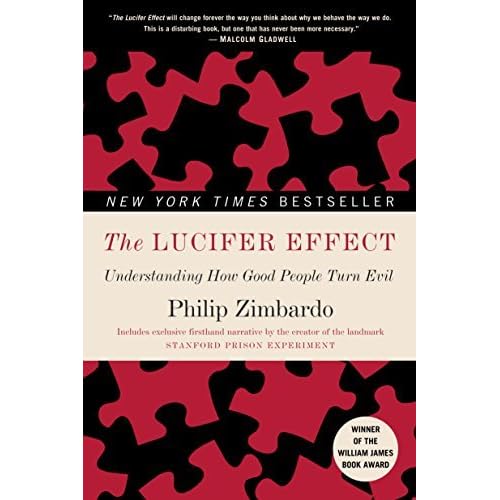
The Lucifer Effect: Understanding How Good People Turn Evil by Philip Zimbardo

From Publishers Weekly
Psychologist Zimbardo masterminded the famous Stanford Prison Experiment, in which college students randomly assigned to be guards or inmates found themselves enacting sadistic abuse or abject submissiveness. In this penetrating investigation, he revisits—at great length and with much hand-wringing—the SPE study and applies it to historical examples of injustice and atrocity, especially the Abu Ghraib outrages by the U.S. military. His troubling finding is that almost anyone, given the right "situational" influences, can be made to abandon moral scruples and cooperate in violence and oppression. (He tacks on a feel-good chapter about "the banality of heroism," with tips on how to resist malign situational pressures.) The author, who was an expert defense witness at the court-martial of an Abu Ghraib guard, argues against focusing on the dispositions of perpetrators of abuse; he insists that we blame the situation and the "system" that constructed it, and mounts an extended indictment of the architects of the Abu Ghraib system, including President Bush. Combining a dense but readable and often engrossing exposition of social psychology research with an impassioned moral seriousness, Zimbardo challenges readers to look beyond glib denunciations of evil-doers and ponder our collective responsibility for the world's ills. 23 photos. (Apr. 3)
Copyright © Reed Business Information, a division of Reed Elsevier Inc. All rights reserved.
http://www.amazon.com/Lucifer-Effect-Understanding-Good-People/dp/1400064112/ref=pd_sxp_f_pt/104-8399067-7467935

Tuesday, March 13, 2007

Some Articles

"Psychology of evil" professor delivers final Stanford lecture (ene talaar iluu ihiig medehiig husvel Amateur-Directors deer Hashaa-giin bichsen "Das Experiment" kinonii review-iig unshaaray)

Steven Landsburg - The Theory of the Leisure Class

Tyler Cowen on EconTalk

Ed Glaeser and Daron Acemoglu debate: "Is Democracy the Best Setting For Strong Economic Growth?"

NYTimes on Ed Glaeser - "Home Economics"

Monday, March 12, 2007

Old Wine in New Bottle?

Доктор, профессор Ц.Дэмбэрэл - "Ахын захиас"

Эр хүйстэй төрөх, ЭР ХYН болохын хооронд их зай бий. Эцэг болох амархаан, харин ААВ байх л амаргүй. Дороо дүүтэй бүхэн ах болчихгүй. Ах шиг Ах байх нь хамгаас чухал. Бас сайн дүү гэж бий. Аав шиг ААВ, Ах шиг АХ, дүү шиг ДYY.

Confucius - Rectification of Names

"There is government, when the prince is prince, and the minister is minister; when the father is father, and the son is son." (Analects XII, 11, tr. Legge).

Saturday, March 10, 2007

George Soros interviews Financial Times

Chrystia Freeland, FT US Managing Editor and FT reporter James Politi, interviewed George Soros in New York on March 6

Transcript: George Soros Interview

Just hit the spot

"[...] she represents the most baffling girl and the most resounding challenge I have yet faced. All my ingenuity barely sufficed to keep her entertained for a couple of hours. Her career has given her such a hard shell that it is damned hard to draw blood. And her prejudice against acedemic life, of which I seem to her so perfect an example, increases her indifference."
- Arthur M. Schlesinger, Jr. "A Life in the 20th Century: Innocent Beginnings, 1917-1950" p.185

Thursday, March 08, 2007

Beatles Reminiscence

Odoogoos 2 jiliin umnu tsag zavaa garzdan baij The Beatles-iin tuhai 5 DVD documentary-g uzej duusgaj bilee. Ur dund ni yurduu 4-hun individual humuun saya saya hunii setgelgeend yamar tom huvisgal hiisniig ni oilgoson yum. Yurunhiiduu Baabar, Bayarkhuu hoyoriin nerledgeer beatlechuud bol "Manai zuunii [bish ee ungursun zuunii] hurug" munuusuu mun. Tegeed ch yur ni "Mongoliin ardchilsan hudulguund Beatles-iin uzuulsen nuluu" gedeg sedveer zanimaldval unuu "Ugiin Uurhai" geed nevtruulgiig hutuldug baisan (odoo Indiana University-d baigaa) Saruul-Erdene-ii heldeg shig "sain nuhval master-iin zereg hamgaalahaar ajil bosood irj medeh yum shuu" hahaha.

Za ene marzagnal ch yahav. Suuliin hed honog ungursun 11 sard Beatles-iin barag buh albumniih ni producer-eer ajillaj baisan Sir George Martin bolon tuunii huu Giles Martin nariin beatlechuudiin ihenh hit duunuudiin shinechilsen huvilbariig bagtaasan "Love" hemeeh tsomogt "dontov". Bi oiriin hoyor honog ene albumnii duunuudaas uur duu sonsooguy bolhoor ingej todotgood baigaa hereg l dee, hehe. Neg yosondoo bol Hashaa-giin heldgeer yostoy "tasarhaiguy gazarguy" bolj :)

Harin saya ene album-iig sonsoj baigaad unuu 5 DVD buhii documentary deer uzej baisan gants hoyor durtay clipee sanav:


Ehniih ni "Something" duunii clip. Linda McCartney-giin hesguudiig haraad l baimaar...


Enehuu "Across the Universe" duug beatlechuud (gehdee yurunhiiduu bol Lennon-McCartney hoyor) Enethegt Ganga Murnii ereg deer Maharishi Mahesh Yogi-giin dor transcendental meditation hiij baih uyedee zohioson gegddeg. Jai Guru Deva Om...

Wednesday, March 07, 2007

Hahaha!

via Big Picture

Monday, March 05, 2007

Blog

http://blog.myspace.com/enkhee - Saya yumaa uhaj baigaad asar ertnii neg blog olov :D (ezen ni hurtel baidgiig ni barag martsan baih aa haha)

A Fatherly Advice, lol

Dear Economist
Published: February 16 2007 17:11 | Last updated: February 16 2007 17:11

Dear Economist,

My stepfather is an alcoholic and spends his time and money on nothing but self-intoxication. This results in me experiencing great anger and wanting to do something stupidly aggressive.

My mother has less and less money to run the house. I no longer live there but will soon have to contribute money to prevent my mother entering a downward spiral of debt. How do I control an alcoholic who is content only with a bottle in his hand? How do I solve the financial problem? How do I stop myself becoming wound up by my stepfather’s actions?

Name and address supplied


Your stepfather is addicted to alcohol, but your real problem is that your mother is addicted to your stepfather and you are addicted to her. There are economic ideas about how to break an unwanted addiction (Nobel laureate Thomas Schelling coined the phrase “egonomics”) but they presuppose that the addict wants to kick the habit. It does not sound as if any of you actually wishes to break his or her respective addiction, which would make them “rational addictions”, as theorised by Gary Becker, another laureate, and Kevin Murphy. Taking into account all the costs and benefits, each of you would prefer to stay addicted.

You should therefore not be focusing on addictions but externalities. Your stepfather is imposing a grievous cost on you and your mother but not offering any compensation. Ronald Coase - yet another laureate - suggested that externalities could be bargained away. You could just pay your stepfather to stop drinking, or he could pay you to stop complaining about it. The problem is that Coase’s theorem requires that you are able to negotiate without costs in time, trouble or embarrassment. In your case, alas, this seems unlikely.
http://www.ft.com/cms/s/7e1c73a4-bbf5-11db-9cbc-0000779e2340,_i_rssPage=ac3ef27a-33fc-11da-adae-00000e2511c8.html

Tim Harford (trust me he's an economist gsn :P) geed unuu "Freakonomics" ene ter shig ediin zasgiin onoluudaar udur tutmiin amidraliig tailbarlah gej orolddog neg nuhur bii. Hervee bi buruu sanaaguy bol Oxford tugssun baih. Anh Hashaa-giin bichlegiig huuj yavsaar baigaad mani eriin bichleguudtey anh taniltsaj bilee, hehe. Odoo bol niitlel buriig ni ali boloh algasalguy unshihiig boddog bolson. Harford yamar ch hun oilgohoor mash engiin goyo bichlegiin helberteyn deer asar complex zuilsiig ediin zasgiin onol ashiglan mash urnaar tailbarladag. Tegeed ta buhend hervee bolomj oldvol doloo honog bur tuunii Financial Times deer hutuldug column-iig unshij baihiig zuvluyu.

http://www.ft.com/arts/columnists/timharford
http://www.timharford.com/


Aan tiim, sayhan tuunii "Undercover Economist" geed nom garsan. Nomiin delguurt hartal jaahan huuhdiin comics ene ter shig sanagdahaar ni avaaguy yum. Bolomj garval olj unshnaa :D

Sunday, March 04, 2007

Contemplation on English Food, lol

Avi: Yes, London. You know: fish, chips, cup 'o tea, bad food, worse weather, Mary fucking Poppins... LONDON! [Snatch]


the history of English food suggests that even on so basic a matter as eating, a free-market economy can get trapped for an extended period in a bad equilibrium in which good things are not demanded because they have never been supplied, and are not supplied because not enough people demand them

An another outstanding analysis by our beloved Paul Krugman :) (little bit outdated, though) -Supply, Demand, and English Food

New Web Log

http://magnai.origo.mn/ - ENTIK-iin yurunhii zohitsuulagch Magnai-giin web log

Зовсоны эцэст бус зөвхөн тэмцэсний үр дүнд л жаргана. /О.Магнай/
lol

Friday, March 02, 2007

Bureaucracy

Oron buhnii bureaucrat nar negdehtun gsn :P

http://www.janbanning.com/the_bureau/the_bureau.html

"The Big Meltdown" by Paul Krugman

FEB. 27, 2008

The great market meltdown of 2007 began exactly a year ago, with a 9 percent fall in the Shanghai market, followed by a 416-point slide in the Dow. But as in the previous global financial crisis, which began with the devaluation of Thailand’s currency in the summer of 1997, it took many months before people realized how far the damage would spread.

At the start, all sorts of implausible explanations were offered for the drop in U.S. stock prices. It was, some said, the fault of Alan Greenspan, the former chairman of the Federal Reserve, as if his statement of the obvious — that the housing slump could possibly cause a recession — had been news to anyone. One Republican congressman blamed Representative John Murtha, claiming that his efforts to stop the “surge” in Iraq had somehow unnerved the markets.

Even blaming events in Shanghai for what happened in New York was foolish on its face, except to the extent that the slump in China — whose stock markets had a combined valuation of only about 5 percent of the U.S. markets’ valuation — served as a wake-up call for investors.

The truth is that efforts to pin the stock decline on any particular piece of news are a waste of time.

Wise analysts remember the classic study that Robert Shiller of Yale carried out during the market crash of Oct. 19, 1987. His conclusion? “No news story or rumor appearing on the 19th or over the preceding weekend was responsible.” In 2007, as in 1987, investors rushed for the exits not because of external events, but because they saw other investors doing the same.

What made the market so vulnerable to panic? It wasn’t so much a matter of irrational exuberance — although there was plenty of that, too — as it was a matter of irrational complacency.

After the bursting of the technology bubble of the 1990s failed to produce a global disaster, investors began to act as if nothing bad would ever happen again. Risk premiums — the extra return people demand when lending money to less than totally reliable borrowers — dwindled away.

For example, in the early years of the decade, high-yield corporate bonds (formerly known as junk bonds) were able to attract buyers only by offering interest rates eight to 10 percentage points higher than U.S. government bonds. By early 2007, that margin was down to little more than two percentage points.

For a while, growing complacency became a self-fulfilling prophecy. As the what-me-worry attitude spread, it became easier for questionable borrowers to roll over their debts, so default rates went down. Also, falling interest rates on risky bonds meant higher prices for those bonds, so those who owned such bonds experienced big capital gains, leading even more investors to conclude that risk was a thing of the past.

Sooner or later, however, reality was bound to intrude. By early 2007, the collapse of the U.S. housing boom had brought with it widespread defaults on subprime mortgages — loans to home buyers who fail to meet the strictest lending standards. Lenders insisted that this was an isolated problem, which wouldn’t spread to the rest of the market or to the real economy. But it did.

For a couple of months after the shock of Feb. 27, markets oscillated wildly, soaring on bits of apparent good news, then plunging again. But by late spring, it was clear that the self-reinforcing cycle of complacency had given way to a self-reinforcing cycle of anxiety.

There was still one big unknown: had large market players, hedge funds in particular, taken on so much leverage — borrowing to buy risky assets — that the falling prices of those assets would set off a chain reaction of defaults and bankruptcies? Now, as we survey the financial wreckage of a global recession, we know the answer.

In retrospect, the complacency of investors on the eve of the crisis seems puzzling. Why didn’t they see the risks?

Well, things always seem clearer with the benefit of hindsight. At the time, even pessimists were unsure of their ground. For example, Paul Krugman concluded a column published on March 2, 2007, which described how a financial meltdown might happen, by hedging his bets, declaring that: “I’m not saying that things will actually play out this way. But if we’re going to have a crisis, here’s how.”

Thursday, March 01, 2007

Economist Joke of the Week

A man dies and goes to hell. There he discovers that he has a choice: he can go to capitalist hell or to communist hell. Naturally, he wants to compare the two, so he goes over to capitalist hell. There outside the door is the devil, who looks a bit like Ronald Reagan. "What's it like in there?" asks the visitor. "Well," the devil replies, "in capitalist hell, they flay you alive, then they boil you in oil and then they cut you up into small pieces with sharp knives."

"That's terrible!" he gasps. "I'm going to check out communist hell!" He goes over to communist hell, where he discovers a huge queue of people waiting to get in. He waits in line. Eventually he gets to the front and there at the door to communist hell is a little old man who looks a bit like Karl Marx. "I'm still in the free world, Karl," he says, "and before I come in, I want to know what it's like in there."

"In communist hell," says Marx impatiently, "they flay you alive, then they boil you in oil, and then they cut you up into small pieces with sharp knives."

"But… but that's the same as capitalist hell!" protests the visitor, "Why such a long queue?"

"Well," sighs Marx, "Sometimes we're out of oil, sometimes we don't have knives, sometimes no hot water…"
http://academic.reed.edu/economics/course_pages/354_s06/joke.htm

Wednesday, February 28, 2007

The Beginning of a Bear Market?


Dow Jones Index collapses over 200 points in less than 2 minutes. Holy crap! According to The NYTimes, "An estimated $600 billion loss in market value on Tuesday erased all of 2007's gains." I'm just really worried about magnitude of the contagion it will create.

http://www.nytimes.com/2007/02/28/business/01stoxcnd.html?hp

Monday, February 26, 2007

Beth Orton


British Rock is incomparable (setgelgeenii huvid ch, hugjmiin huvid ch). Hail Beth Orton! "Perhaps she is the most underrated singer/songwriter of our time."

Thursday, February 22, 2007

The Future of Economics Isn’t So Dismal

The Future of Economics Isn’t So Dismal by David Leonhardt

Who are the young (untenured) economists doing work that is both highly respected among experts and relevant to the rest of us? Who, in other words, is the future of economics?

Ulrike Malmendier
Stefano DellaVigna
Roland Fryer
Jesse Rothstein
Jesse Shapiro
Emily Oster
Amy Finkelstein
Benjamin Olken
Raj Chetty
Justin Wolfers
Xavier Gabiax
Matthew Gentzkow
Dean Karlan

Friday, February 16, 2007

Mongolian Development Economics Blog

Hugjliin ediin zasgiin talaar yariltsatsgaagay - http://hugjil.blogspot.com/

Wednesday, February 14, 2007

Robert Lucas on Growth, Poverty and Business Cycles

Bob Lucas, Nobel Laureate and professor of economics at the University of Chicago talks about wealth and poverty, what affects living standards around the world and over time, the causes of business cycles and the role of the money in our economy. Along the way, he talks about Jane Jacobs, immigration, and Milton Friedman's influence on his career.
http://www.econtalk.org/archives/2007/02/lucas_on_growth.html

"Once you start thinking about them, it's hard to think about anything else" - Bob Lucas

Saturday, February 10, 2007

Greeting

Guten Tag und Vielen Dank to all my German readers :)

Wednesday, February 07, 2007

Urianhai ba Kant: Means and Ends

"Буддын гvн ухаанд "Буяны хууль" гэдгээр бvх vйлд ханддаг. Энэ хуулиар бусдад тус болоод, тус болж байгаагаа єєрєє мэдэхгvй байх ёстой. Одоогийн хэлээр бол "vнэлэхгvй" байх ёстой. "Ма-ма", "ла-ма" эд нар чинь ерєєсєє vнээ гэсэн vг гэж байгаа юм ш дээ. Yнээ гэдэг vрээ болоод энэ хvн тєрєлхтнийг сvvгээрээ угжиж, цатгаж, цайлж байгаа. Yнээ єєрєє vvнийг мэдэхгvй. Тэгэхээр хамгийн буянтай амьтан байгаа байхгvй юу. Єнєєдєр тэрбум тєгрєг бусдад єгєєд тэрийгээ мартаж чадахгvй байгаа бол тэр буян биш. Яагаад гэвэл араас нь хармын сэтгэл дагаад, хариу нэхээд явдаг. Хариу нэхээгvй, хармын сэтгэл цээжинд нь vvсээгvй тийм єглєгийг буян гэж vздэг." - Урианхай


"So act as to treat humanity, whether in thine own person or in that of any other, in every case as an end, never as means only." - Kant